

Hilmi Dindar: The locked fault line in Cyprus became open after the Maraş earthquake
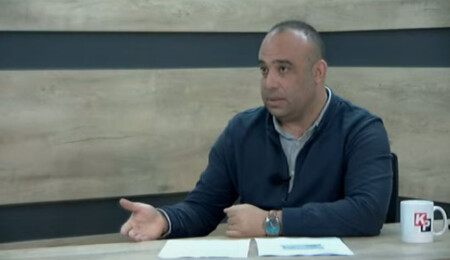
Geophysics Engineer Dr. Hilmi Dindar, mentioning that there is a dormant fault called ovgos parallel to the Girne Mountains, stated that this does not mean that there will be no earthquake, and said, "The locked fault line in Cyprus became open after the Maraş earthquake."
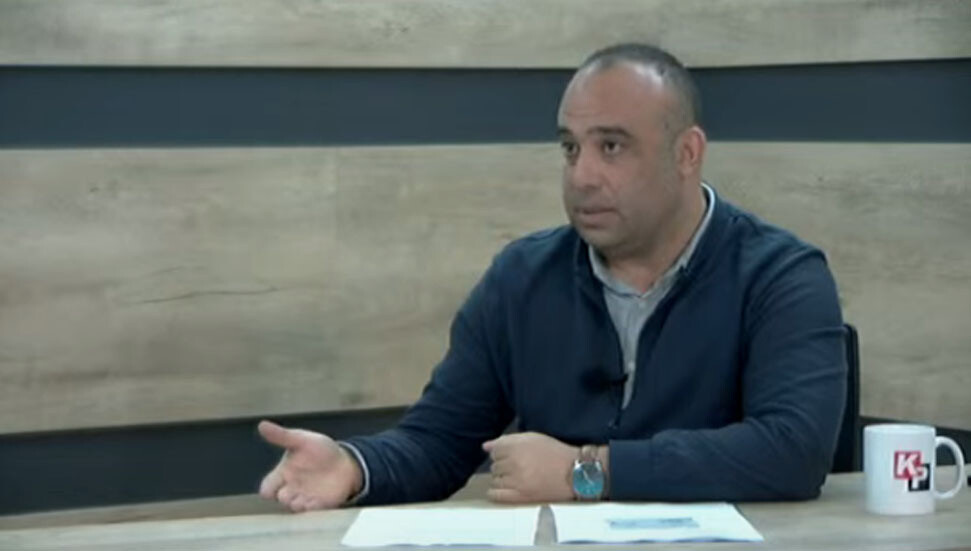
Geophysics Engineer Dr. Hilmi Dindar participated as a guest in the program called "Sabah Post", which was broadcast on Kıbrıs Postası TV and prepared and presented by Gökhan Altıner.
Dr. Hilmi Dindar stated that Turkey is an earthquake zone and carries a serious earthquake risk because it is at the intersection of earthquake belts. Explaining that there are different layers in the world, Dindar noted that there are lithospheric plates floating on the crust and these are called oceanic and continental.
Dindar said, “There is a plate called the Anatolian microplate, which is dominant in 3 regions in Turkey and is actively found. On the other hand, the North Anatolian fault continues towards the south, and some of it goes to the Ölüdeniz through the Eastern Mediterranean.
Stating that all public institutions were told that the ground was risky for Kahramanmaraş and that researches should be done according to him, Dindar stated that what was said was not evaluated.
Dindar said, "We experience an earthquake disaster every 2 years," adding that they have warned but that this should be supported by the state.
“EARTHQUAKE DOESN'T KILL PEOPLE”
Dindar said, “We experienced two major earthquakes; One of them happened on the East Anatolian fault and the other in Elbistan, which is the continuation of the fault to the west,” he said, emphasizing that the earthquake was not a natural event that killed people.
“TO BE CAUGHT UNDER PREPAREDNESS FOR EARTHQUAKE CAUSES DEATH”
Noting that unprepared systems will have negative effects and may cause people to die, Dindar pointed out that in order to solve this problem, it is necessary to listen to scientists.
Stating that the constructions on the fault should be made less or original designs should be made on the fault tops, Dindar said, "The ground also has a document such as our name and surname... We cannot know the time of the earthquake, but we can know where it will happen."
“THE FAULT LINE IN CYPRUS HAS BEEN OPEN AFTER THE MARAS EARTHQUAKE”
Mentioning that there is a dormant fault called ovgos in Cyprus parallel to the Girne Mountains, Dindar said, "There is also the Değirmenlik fault, they have not produced an earthquake in the last 123 years." On the other hand, underlining that this does not mean that there will be no earthquake, Dindar noted that the fault turned from a locked position to an open position after the Maraş earthquake.
Saying, “This may correspond to an earthquake between 6.5-6.8,” Dindar said that the buildings may not be demolished, but may be damaged.
Talking about the duties required by his profession, Dindar said, "Our duty is to know how much of an impact the earthquake will have, and for the right engineering, we give these reports to civil engineers by interpreting them."
Stating that 2 reports from geology and geophysics engineering went to civil engineering, Dindar stated that they were transferred to the building in the most accurate way and they achieved this in Cyprus.
Expressing that the TRNC is not in a bad situation, Dindar said that they have caught on to modern developments and that there is a correct structuring.
“THE EARTHQUAKE WAVE IN NICOSIA IS MORE RISKY FOR THE WEST REGION”
Showing the visuals of his thesis, Dindar stated that the effect of the earthquake wave in Nicosia on the buildings is at the level of 1 or 1 and a half floors, and that there is some risk in some places and this risk is especially seen on the west sides.
“WE HAVE REVEALED THE STRUCTURE OF THE FLOOR LAYERS”
Using the expressions “We put it in the room bylaws before it was built in newly constructed buildings and this study is a study in which we measure ground vibration at 1 kilometer intervals”, Dindar said that they revealed the structure of the ground layers.
Drawing attention to the fact that more accurate buildings are built with this application, Dindar noted that the number of floors is determined in this way.
“The depth of the earthquake, the direction it came from and the duration of the earthquake affect the magnitude of the earthquake,” Dindar said.
“TOO DEPTH MAKES A 30 SECONDS EARTHQUAKE FEEL LIKE 40 SECONDS”
Pointing to the image he showed, Dindar stated that shallower soil layers were encountered in mountainous areas. Dindar said, “As you come into Nicosia, the alviation provides more depth and can increase the duration of the earthquake's wave. It makes a 30-second earthquake feel like 40 seconds.”
“WE HAVE HIGH VALUES BUT 35 PERCENT MAY BE DIFFICULT”
Speaking about the damage index image, Dindar said that it was determined whether the building would cause destruction if it was built. Dindar said, "We have high values, but 35 percent of them can be troublesome."
Lastly, Dindar noted that two major earthquakes have not been seen in the same day for the last hundred years, which is an interesting situation.
Comments
Attention!
Sending all kinds of financial, legal, criminal, administrative responsibility content arising from illegal, threatening, disturbing, insulting and abusive, humiliating, humiliating, vulgar, obscene, immoral, damaging personal rights or similar content. It belongs to the Member / Members.