

Politis: Inconclusive Leaders’ Meeting Causes Discomfort at the UN
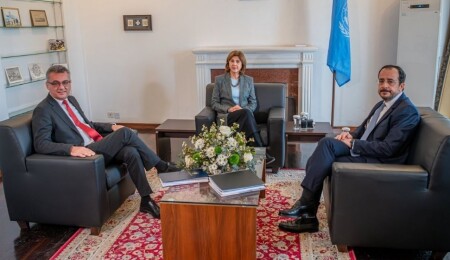
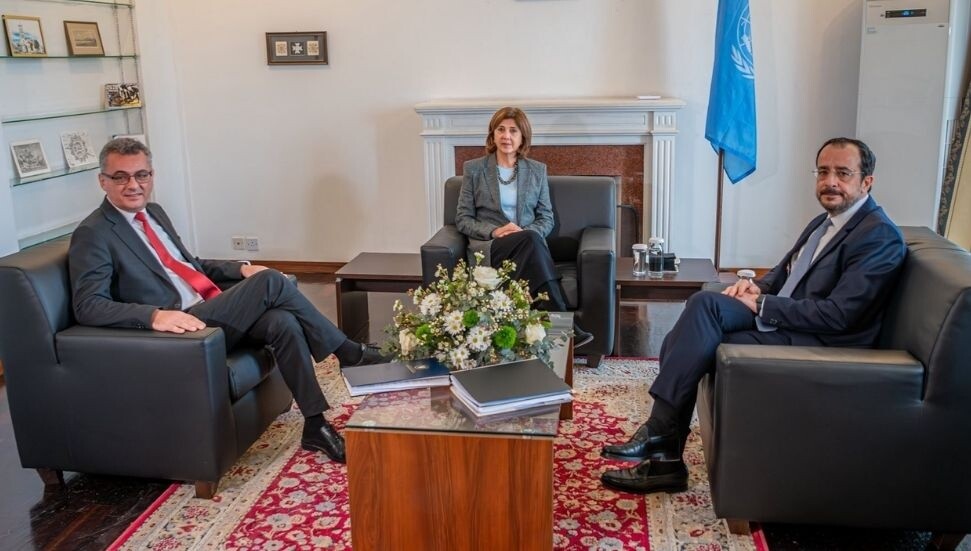
Greek Cypriot daily Politis reported that the leaders’ meeting held on Wednesday with the participation of the UN Secretary-General’s Personal Envoy Maria Angela Holguin failed to produce any progress, creating dissatisfaction both within the United Nations and among diplomatic circles.
The newspaper wrote that the “ineffective meeting” caused “serious unease” at the UN and in both communities, particularly because no agreement was reached even on so-called “low-level” issues such as the opening of new crossing points.
According to Politis, the UN had hoped that the two sides, through Holguin’s facilitation, could find common ground and at least preserve the momentum of the process. However, the failure of renewed communication between the two leaders has raised concerns about the future of the talks.
Foreign diplomats were quoted as saying that the entire effort has become trapped in differing interpretations of conditions and proposals submitted by the two sides, creating a vicious circle that prevents agreement on issues that would demonstrate genuine willingness to pursue a settlement.
The paper noted that Wednesday’s meeting neither clarified steps on substantive matters related to the Cyprus problem nor produced even limited memoranda of understanding that could have created an environment for a new initiative.
With President Tufan Erhürman putting forward four new proposals and Greek Cypriot leader Nikos Christodoulides adding five more, Politis said the discussion has become increasingly complex and has drifted away from the core of the Cyprus issue. It added that Christodoulides’ proposals raise reasonable questions about the current direction of the process.
Although there is an expressed intention to resume negotiations from where they left off at Crans-Montana, the newspaper argued that Christodoulides’ proposals follow a contradictory logic. What matters, it stressed, is not the number of proposals but their substance and political consequences.
The paper also pointed to uncertainty over political equality as a key problem, underlining that political equality, as defined in UN resolutions and joint statements, constitutes the agreed basis of a settlement and is not an issue open to further negotiation.
Finally, Politis claimed that the Turkish Cypriot side has difficulty advancing substantive negotiations due to “obstacles” imposed by Turkey, while also arguing that Turkey has not clearly defined its position on a bi-zonal, bi-communal federation.
Comments
Attention!
Sending all kinds of financial, legal, criminal, administrative responsibility content arising from illegal, threatening, disturbing, insulting and abusive, humiliating, humiliating, vulgar, obscene, immoral, damaging personal rights or similar content. It belongs to the Member / Members.