

Holguin: Failure by Leaders to Show Progress Could Lead to Prolonged Stalemate

United Nations Secretary-General’s Special Representative for Cyprus Maria Angela Holguin has warned that unless the two sides demonstrate tangible progress, the Cyprus issue could enter a new period of prolonged deadlock.
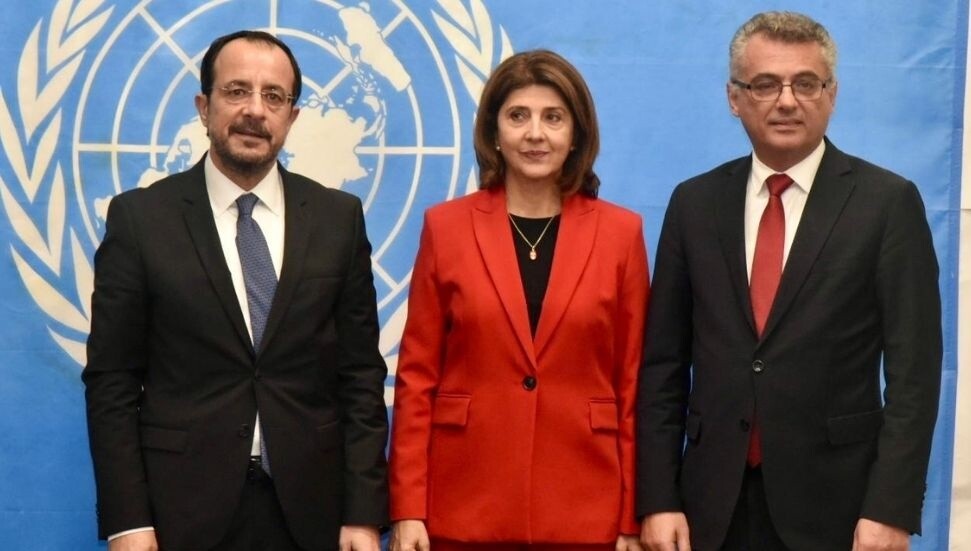
In an opinion article released to the press on Friday, Holguin said that despite commitments made in March 2025 in Geneva on confidence-building measures, no significant advancement has been achieved so far.
Referring to the meeting she convened on January 17, 2026, Holguin said she brought together Greek Cypriot leader Nikos Christodoulides and Turkish Cypriot leader Tufan Erhurman for direct talks aimed at keeping channels open for the possible resumption of negotiations in the medium term. She noted that while no concrete results were expected from the meeting, the two leaders listened to each other’s views and began establishing a relationship based on personal trust.
Holguin stressed that in a conflict spanning more than half a century and marked by repeated failed negotiation efforts, leaders must avoid raising expectations that could lead to further disappointment among their communities. She warned that a lack of progress could result in many more years of stagnation.
She also drew attention to the political context on both sides of the island, noting that the Republic of Cyprus has assumed the Presidency of the Council of the European Union while preparing for parliamentary elections in May. In the north, she said, a new leadership with a different vision is in the process of consolidating its position and managing relations with Turkey, making the coming months a complex period for dialogue.
Holguin underlined that success in long-standing conflicts requires careful preparation and sustained groundwork, enabling both sides to better understand each other’s interests, concerns and priorities. She described the recent leaders’ meeting as an initial step in that direction.
Highlighting the importance of direct contact, Holguin said the idea that the two sides could speak to each other without using the United Nations as an intermediary was in itself a significant development. She added that blaming the other side or third parties for the lack of progress would not serve any constructive purpose.
She called for a new model of engagement in the coming months that would demonstrate genuine political will to restart negotiations. Both communities, she said, must see that their leaders are prepared to change the current situation for the benefit of all.
Holguin said both leaders would need time for their internal political processes to mature, but stressed that small joint decisions and exploratory steps should continue so that a more formal negotiation process could be relaunched from July onward.
She also said she would continue efforts to encourage dialogue among key groups from both communities, citing recent meetings with youth representatives and academics, as well as upcoming talks between the co-chairs of the Technical Committees in London.
Holguin concluded by saying she plans to return to the island in the coming months when conditions are more conducive to contributing to concrete progress and when the leaders are ready to take practical steps toward a new phase of negotiations.
Comments
Attention!
Sending all kinds of financial, legal, criminal, administrative responsibility content arising from illegal, threatening, disturbing, insulting and abusive, humiliating, humiliating, vulgar, obscene, immoral, damaging personal rights or similar content. It belongs to the Member / Members.