

Erhürman: Military Deployments To South Cyprus Should Not Be Permanent
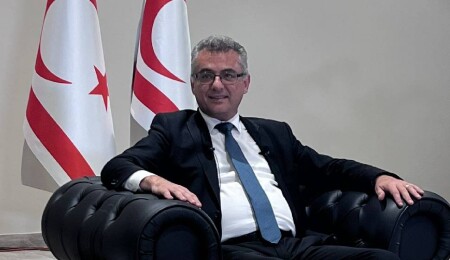
President Tufan Erhürman has said that military deployments to South Cyprus should not become permanent, stressing that the Turkish Cypriot side remains in close coordination with Turkey amid escalating regional tensions.
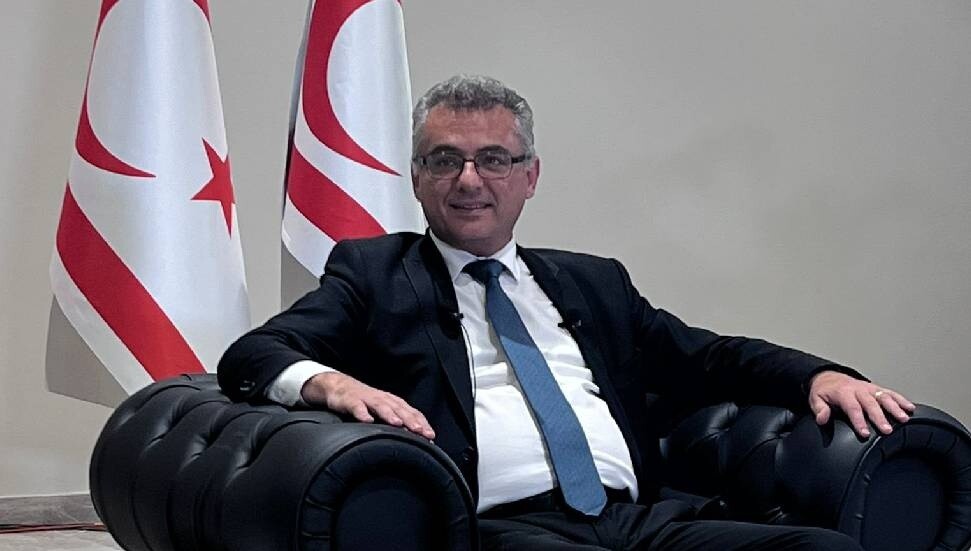
Speaking to Anadolu Agency, Erhürman said that Turkey’s recent foreign policy stance in the face of the conflict involving the United States, Israel and Iran has been widely appreciated by many countries. “It is in fact a great source of pride to observe the position taken by the Republic of Turkey in the face of these developments,” he said.
Erhürman noted that they are maintaining close coordination and unity of discourse with Turkey on all matters. He explained that, as the TRNC, they have evaluated all possible risks that could extend to Cyprus following the escalation that began with US and Israeli attacks on Iran and continued with Tehran’s retaliatory actions. In this context, he said all necessary preparations have been made in consultation with Turkey and, so far, no serious threat has emerged for Northern Cyprus.
While underlining that they feel secure under current conditions, Erhürman stressed that they are not acting complacently and that all precautions continue to be taken. He reiterated that Northern Cyprus remains one of the safest places in the region.
Erhürman criticized the Greek Cypriot administration for pursuing military agreements and alliances aimed at creating a balance of power against Turkey, arguing that such efforts are unrealistic and lack practical viability. “Regrettably, while British bases have recently come to the forefront, the existence of the Andreas Papandreou Air Base in Paphos and the military agreements and alliances associated with it should not be overlooked,” he said.
He warned that the risks created by these military agreements and alliances could also affect Turkish Cypriots, despite the fact that such decisions are taken without their consent. Erhürman stressed that it is unjust for Turkish Cypriots to be expected to bear the consequences of decisions made without their will.
Highlighting the broader regional picture, Erhürman said it is significant that both Turkey and the TRNC are located in relatively secure areas. He added that Turkey’s foreign policy, guided by the principle of “Peace at home, peace in the world” articulated by Mustafa Kemal Atatürk, is once again demonstrating its impact under current conditions.
Erhürman emphasized that Turkey’s diplomatic approach has positioned it as a unique actor capable of engaging with all sides, thereby strengthening its role in efforts to resolve the conflict. He also pointed out that Turkish President Recep Tayyip Erdoğan has consistently called for peace and diplomacy, while Foreign Minister Hakan Fidan continues intensive diplomatic contacts in the region.
Expressing support for the deployment of Turkish F-16 fighter jets to Northern Cyprus, Erhürman said criticism from the Greek Cypriot side is unfounded. He argued that Turkey, as a guarantor power of the island, has a legitimate right to maintain such a presence. “They criticize the F-16s sent here by Turkey and even see themselves as having the authority to comment on this. According to the status of this island, the Republic of Turkey is a guarantor power for the entire island. What, then, is the status of countries like France or the Netherlands?” he asked.
Erhürman noted that the scale of military deployments to South Cyprus has reached a level where “there is almost no space left at sea,” pointing to the presence of various foreign military assets in the region. He argued that such developments inevitably attract international media attention and contribute to the perception that the island is not a safe destination, regardless of official statements to the contrary.
He further stated that the Greek Cypriot administration’s efforts to establish a balance of power against Turkey not only increase regional risks but also fail to achieve their intended objectives. According to Erhürman, the very fact that the Greek Cypriot side continues to feel insecure despite these alliances demonstrates the ineffectiveness of their strategy.
Referring to recent regional alignments, he highlighted attempts to form alliances involving Israel, Greece and South Cyprus, noting that Israel is now a central actor in the ongoing conflict. “If you present Israel as one of your alliance partners in such a war environment, it is clear that this will generate security concerns,” he said.
Erhürman stressed that the sources of current security anxieties are evident and reiterated that the Greek Cypriot leadership should abandon what he described as a “reckless approach” and adopt a more realistic understanding of the situation.
“Military deployments invited to South Cyprus should not become permanent,” he said, adding that he does not believe such deployments will be permanent and that they should not be allowed to become so.
Concluding his remarks, Erhürman warned that if the Greek Cypriot administration continues to view itself as a uniquely privileged actor in the region, it will face increasing risks. He emphasized that, thanks to coordinated policies, Turkey and the TRNC remain among the most secure actors in the region under the current circumstances.
Comments
Attention!
Sending all kinds of financial, legal, criminal, administrative responsibility content arising from illegal, threatening, disturbing, insulting and abusive, humiliating, humiliating, vulgar, obscene, immoral, damaging personal rights or similar content. It belongs to the Member / Members.