

Özersay Says Turkey Does Not View SAFE, Customs Union Or Visa Liberalisation As Bargaining Chips
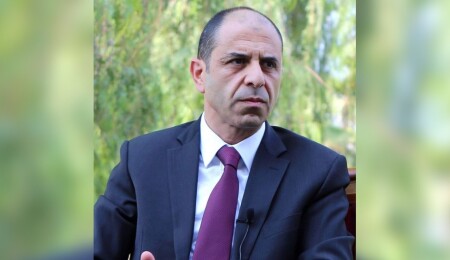
People's Party (HP) leader and former foreign minister Prof. Dr. Kudret Özersay has said Turkey does not view participation in the EU's SAFE programme, the modernisation of the Customs Union or visa liberalisation as issues to be negotiated in exchange for a return to a federal basis for Cyprus talks.
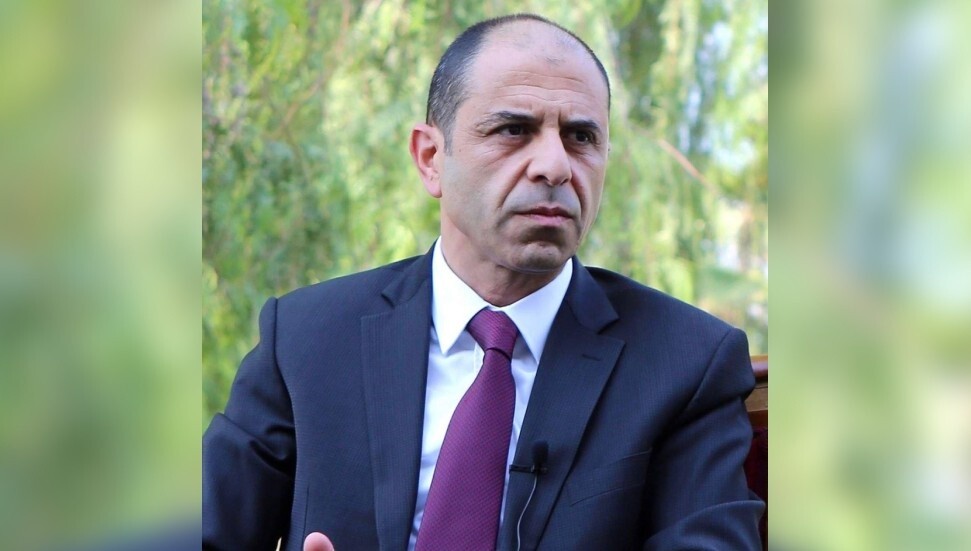
Speaking to Kıbrıs Postası and BRT ahead of UN Secretary-General António Guterres' planned visit to Cyprus on 27-29 July, Özersay outlined three possible scenarios for the visit.
The professor of international relations argued that the Cyprus issue cannot be assessed independently of global power dynamics. He said the current international environment does not offer Turkey sufficient incentives from the European Union to return to a federal settlement framework, adding that a new negotiation process would only become possible if broader geopolitical conditions change.
Three Possible Scenarios For Guterres' Visit
Özersay said the first possibility is that Guterres will use the visit to assess whether the two sides can find common ground. If progress is made, the visit could serve as preparatory groundwork for a future informal expanded 5+1 conference on Cyprus.
The second scenario, he said, is that Guterres concludes after meeting both leaders that no common ground exists. In that case, the UN chief could offer recommendations to the parties, and the visit could effectively become a "farewell visit."
As a third possibility, Özersay recalled former UN Secretary-General Ban Ki-moon's 2010 visit to Cyprus, which generated high expectations but ultimately failed to produce common ground. He said Guterres' visit could similarly end without tangible progress, although the UN chief could still present his recommendations before concluding what would effectively be a farewell mission.
Özersay also outlined why he believes Turkey is unlikely to soften its position on Cyprus in return for certain benefits from the European Union.
Assessing the impact of recent developments in Turkey-EU relations on the Cyprus issue, Özersay discussed whether Ankara could return to a federal settlement framework in exchange for progress on several issues currently on the EU agenda. He argued that, under the current international circumstances, such a scenario is unrealistic.
"Turkey Sees Participation In SAFE As A Right"
Özersay said Turkey regards participation in the EU's SAFE defence programme as a legitimate right, noting that, as NATO's second-largest military, Ankara does not believe it should have to make concessions to secure its inclusion.
"Updating The Customs Union Benefits Both Turkey And The EU"
On the Customs Union, Özersay said its modernisation would serve the interests of both Turkey and the European Union, arguing that it should not be linked to concessions on the Cyprus issue.
"Turkey Has Long Served As Europe's Frontline On Migration"
Addressing visa liberalisation, Özersay said Turkey has for years acted as Europe's "frontline outpost" in controlling irregular migration and therefore expects reciprocal steps from the EU.
He argued that all three issues represent legitimate expectations for Turkey and said it was unrealistic to expect Ankara to abandon its two-state policy on Cyprus and return to a federal framework in exchange for progress in these areas.
"The Cyprus Issue Is An International Dispute, Not Just A Conflict Between Two Communities"
Özersay also argued that the Cyprus issue should be viewed as an international dispute rather than simply a disagreement between the island's two communities, saying global power dynamics are as influential as the positions of the parties themselves in determining whether a settlement process can succeed.
Reviewing past peace efforts, he said the current international environment is not yet conducive to launching a meaningful new round of negotiations.
Recalling the period surrounding the Annan Plan, Özersay noted that Turkey at the time had a strong prospect of European Union membership, a strategic incentive that no longer exists today.
He argued that the benefits currently being offered to Turkey are not attractive enough to persuade Ankara to abandon its two-state policy on Cyprus, adding that a results-oriented negotiation process would only become possible if the broader international landscape changes.
Özersay said that both the number of actors and the factors shaping the Cyprus issue have increased significantly over the past two decades, making it essential to assess developments realistically rather than emotionally.
While acknowledging that the status quo is not in the interests of Turkish Cypriots, he stressed the importance of correctly interpreting the current international environment.
"I do not believe any meaningful process will begin in Cyprus before the bigger picture becomes clear," he said.
Global Power Politics Will Determine The Next Phase
Özersay described UN Secretary-General António Guterres' upcoming visit to Cyprus as important but said it would not, by itself, determine the future of the peace process.
"The decisive factor will be global power politics," he said, arguing that the Cyprus issue has never been solely a matter for Cypriots.
He noted that the 1960 Republic of Cyprus emerged under Cold War conditions and was not created independently by the island's two communities, but rather resulted from negotiations between Turkey and Greece in Zurich under US influence.
"The Cyprus issue is an international dispute," Özersay said, adding that the current deadlock is likewise a product of global geopolitical dynamics.
He concluded by saying the world is moving towards a multipolar order and that "the stars need to align" before conditions become favourable for a settlement.
"When global powers decide there is a need for a solution in Cyprus, Cypriots will also play their part in that process. We cannot solve the Cyprus issue on our own," he said.
Comments
Attention!
Sending all kinds of financial, legal, criminal, administrative responsibility content arising from illegal, threatening, disturbing, insulting and abusive, humiliating, humiliating, vulgar, obscene, immoral, damaging personal rights or similar content. It belongs to the Member / Members.