

Mavroyannis: Acceptance of the Federation Model Was the Greek Cypriot Side’s Biggest Concession
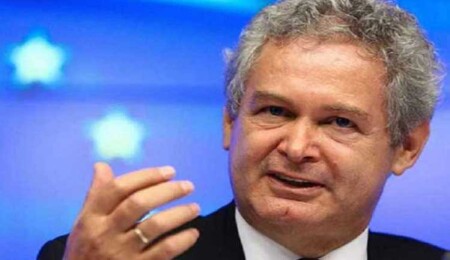
Former Greek Cypriot negotiator Andreas Mavroyannis said the Greek Cypriot side's acceptance of a federal model after 1974 was its biggest concession, made in the expectation that Turkish troops would withdraw, territorial adjustments would be implemented, displaced persons would return, and the property issue would be resolved.
According to Alithia, the announcement that President Tufan Erhürman and Greek Cypriot leader Nikos Christodoulides will meet on August 26 has raised "legitimate question marks."
The newspaper questioned why the two leaders would have to wait four weeks after UN Secretary-General António Guterres' departure from the island before holding a face-to-face meeting.
Alithia: Christodoulides 'Ready Since Yesterday,' Yet Meeting Set for End of August
Under the headline "Ready Since Yesterday, Yet Appointment Set for the End of August," Alithia recalled that President Erhürman had proposed meeting weekly immediately after Guterres' visit and repeated that call publicly on August 3.
The paper also noted that on the same day, Government Spokesman Victoras Papadopoulos said the Greek Cypriot side had the political will to meet "even yesterday," while also stating that President Christodoulides would remain at the UN's disposal throughout August and that preparatory work had begun immediately after Guterres left the island.
Despite those statements, the leaders' first meeting was later announced for August 26.
The newspaper pointed out that although responsibility for the delay could not be attributed solely to Christodoulides, there appeared to be a contradiction between the repeated claims of readiness and scheduling the first meeting only at the end of the month.
It also recalled that the Greek Cypriot administration had described the August 26 meeting as part of the "appropriate preparation" for a new expanded conference.
According to the report, preparatory work could be carried out through negotiators, technical committees, the UN and diplomatic contacts. However, it stressed that issues such as methodology, the point of reference for negotiations and substantive disagreements would ultimately require political agreement at the highest level.
The paper argued that the two leaders could not unilaterally determine a common methodology, confirm which convergences should be considered finalized or decide on confidence-building measures without the participation of the other side. It therefore questioned what exactly would be completed before August 26 and which issues would inevitably remain unresolved until the leaders met.
Haravgi Highlights Mavroyannis Interview
Meanwhile, Haravgi published an interview Mavroyannis gave to the Cyprus News Agency (CNA), in which he described the Greek Cypriot side's acceptance of a bi-communal federation as its "maximum concession."
He said that under the conditions that emerged after 1974, accepting a federal solution represented a highly significant compromise. He noted that the 1977 Denktaş-Makarios High-Level Agreement accepted a bi-communal federation, while the principle of bizonality was adopted later.
According to Mavroyannis, this concession was made with the expectation of troop withdrawals, territorial adjustments, the return of displaced persons and arrangements regarding property rights.
He also argued that Cyprus' accession to the European Union in 2004 created an important opportunity that was reflected in the 2017 negotiations.
Mavroyannis said he had opposed the Annan Plan because he viewed it as "a problematic solution produced through arbitration," but described the negotiations leading up to Crans-Montana as highly positive because they resulted from free negotiations between the parties.
"The sides had never been closer than they were at Crans-Montana," he said, while rejecting claims that the Greek Cypriot side was responsible for the collapse of the talks. Instead, he argued that then Turkish Foreign Minister Mevlüt Çavuşoğlu had refused to accept the immediate abolition of guarantees and a framework for the complete withdrawal of Turkish troops.
He further described the Cuéllar Indicators and the Ghali Set of Ideas as valuable foundations for future negotiations, adding that every available opportunity should be explored in pursuit of a clear political objective.
Asked about the way forward, Mavroyannis said the gains achieved during previous negotiations should be preserved and that UN Secretary-General António Guterres' six-point framework should not be abandoned.
Omirou Also Calls for Federal Settlement
Haravgi also published an interview with former Greek Cypriot House President and former EDEK leader Yiannakis Omirou.
Omirou described the 1977 Denktaş-Makarios and 1979 Denktaş-Kyprianou High-Level Agreements as the most decisive milestones in efforts to resolve the Cyprus issue.
He said the Greek Cypriot side accepted a federal model through those agreements while insisting on strong references to freedom of movement, freedom of settlement, property rights, human rights and fundamental freedoms.
Omirou argued that neither the 1992 Ghali Set of Ideas nor the 2017 Guterres Framework ultimately produced an agreement. He claimed that the failure of the 2017 negotiations stemmed from the Turkish side's refusal to relinquish unilateral intervention rights under the guarantee system and to accept the complete withdrawal of Turkish troops.
He described the Annan Plan as the only comprehensive settlement proposal for Cyprus but argued that it failed to satisfy Greek Cypriot expectations because it included derogations from the EU acquis, restrictions on settlement, the continued presence of Turkish troops, the continuation of guarantees and provisions concerning Turkish settlers.
Omirou concluded by saying that Greek Cypriots seek a solution that would end what he described as the occupation, ensure the withdrawal of Turkish troops, abolish guarantees and intervention rights, and establish a democratic, functional and sustainable federal state based on international and European law, with a single international legal personality, a single sovereignty and a single citizenship.
Comments
Attention!
Sending all kinds of financial, legal, criminal, administrative responsibility content arising from illegal, threatening, disturbing, insulting and abusive, humiliating, humiliating, vulgar, obscene, immoral, damaging personal rights or similar content. It belongs to the Member / Members.