

Erhürman: No Solution Can Be Implemented Without Turkey’s and Guarantors’ Approval
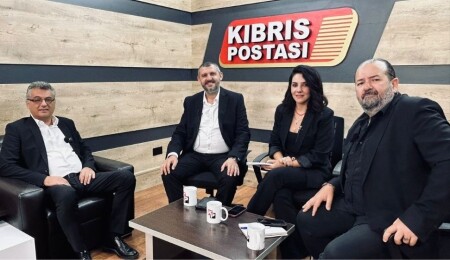
President Tufan Erhürman said the groundwork for renewed negotiations on the Cyprus problem was beginning to take shape, stressing that a 5+1 meeting without Turkey was not possible. He said there was no alternative to acting in coordination with Turkey and argued that negotiations should focus on substance, the transition period and measures that would make life easier for both communities rather than on the name of the solution model.
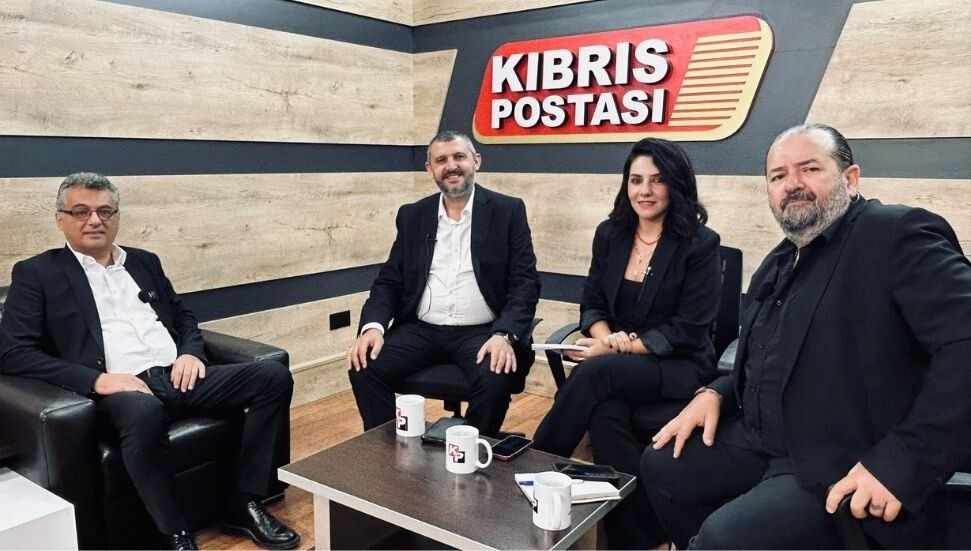
Speaking on Kıbrıs Postası TV’s “President Special Broadcast,” Erhürman answered questions from Canan Onurer, Gökhan Altıner and Ulaş Barış.
Erhürman: Guterres Visit Was Successful
Asked about UN Secretary-General António Guterres’ visit, Erhürman said it would be as wrong to describe the visit as a “holiday and farewell visit” as it would be to claim that the Secretary-General had come to achieve a solution.
He said Guterres had visited with a large delegation and devoted considerable time to the Cyprus issue, adding that the UN chief had called for a 5+1 meeting following preparations on confidence-building measures, methodology and the substance of the negotiations.
“I will not negotiate just for the sake of negotiating. I want result-oriented negotiations,” Erhürman said, adding that this was also what the Secretary-General wanted.
Erhürman said confidence-building measures were necessary to bring the two communities closer after eight or nine years without a meaningful negotiating process, while a methodology also needed to be established for negotiations to resume.
He said Guterres had treated the four-point methodology he proposed not as a precondition but as a methodology, adding that this was not a success story but something that should normally have been in place.
Mixed Marriages Discussed
Erhürman said the issue of mixed marriages had been raised directly by Guterres during their private meeting and had also been brought up by the UN Secretary-General’s Personal Representative for Cyprus, Maria Angela Holguin.
He said that if a solution was genuinely being pursued, steps toward a settlement could be taken more easily, describing the process as one that should advance on the basis of mutual interests.
Regarding his planned August 26 meeting with Greek Cypriot leader Nikos Christodoulides and confidence-building measures, Erhürman said he had told Guterres after his visit, “Since we have been given homework, let’s meet at least once a week.”
He said Christodoulides was available on the agreed date, although no agenda had yet been set.
Crossing Points and Mine Clearance
Erhürman said the confidence-building measures discussed during the meetings following Guterres’ visit focused on crossing points and mine clearance.
He said the two sides were working on the basis of the crossing points agreed in New York and the map provided by the UN, adding that they did not want to complicate matters by introducing new issues and preferred to proceed with the crossings already agreed upon.
However, Erhürman said Christodoulides had raised different crossing points at the table, preventing an agreement from being reached.
On mine clearance, Erhürman said Christodoulides had argued that the issue should be addressed after a settlement and therefore did not consider it a confidence-building measure.
According to Erhürman, Christodoulides had said that because there were tanks in the area, removing anti-tank mines was an issue for after a settlement.
Erhürman: “Arrests Are Being Used as a Political Tool”
Asked about reports in the Greek Cypriot press claiming that the UN was supporting him, as well as Christodoulides’ comments on arrests, Erhürman said the methodology was designed to facilitate a solution and that Guterres’ reference to methodology in his own statement was an important step toward a settlement.
Erhürman argued that Christodoulides’ statement that people would be arrested “if necessary” showed that the arrests were political.
He said this amounted to an admission by Christodoulides that the law was being used as a political instrument in property-related arrests.
Erhürman also noted that Germany had raised objections over the issue, arguing that the process was political rather than purely legal.
“Greek Cypriot Administration Acts as if Turkish Cypriots Do Not Exist”
Erhürman accused the Greek Cypriot side of using the means at its disposal to ignore Turkish Cypriots in discussions concerning missing persons, property and the conflicts of the past.
He said it was unacceptable that a monument had been erected in the European Parliament for Greek Cypriot missing persons while Turkish Cypriot missing persons also existed.
On property, he said he approached the issue with an understanding that displacement had occurred on both sides, while arguing that the Greek Cypriot side acted as though only Greek Cypriots had been affected.
Erhürman said it was unacceptable to act as though only 1974 had happened while ignoring the period between 1963 and 1974.
“No Solution Can Be Implemented Without Turkey’s and the Guarantors’ Approval”
Addressing relations with Turkey, Erhürman said a 5+1 meeting without Turkey was impossible and that the Turkish Cypriot side needed to act in coordination with Ankara.
“There is no alternative to acting in coordination with Turkey,” he said.
Erhürman said no settlement agreement could be implemented without Turkey’s approval, adding that the same applied to the other guarantor countries.
He said there had been no disagreement so far because the substance of a possible settlement had not been discussed. Differences could emerge if substantive issues were put on the table, he added, but that stage had not yet been reached.
“We Should Focus on Substance Rather Than Concepts”
Erhürman said terminology could be divisive and that the name of a model was not sufficient to explain its content.
He said the focus should instead be on creating a permanent and functional model that would make life easier and more viable for people on the island.
“What matters is not what it is called, but the content and the transition period,” Erhürman said.
He also recalled that those who voted against a federal solution in the Greek Cypriot community in 2004 were still generally described as supporters of a federation, arguing that the name of the model alone was therefore insufficient.
Erhürman said the Cyprus problem had once again started to be discussed and expressed his willingness to give interviews to Greek Cypriot journalists.
He said international developments were also creating a renewed perception that resolving the Cyprus problem could contribute to stability and peace in the region, adding that this was the first time in a while that the issue had returned to the international agenda in this context.
Comments
Attention!
Sending all kinds of financial, legal, criminal, administrative responsibility content arising from illegal, threatening, disturbing, insulting and abusive, humiliating, humiliating, vulgar, obscene, immoral, damaging personal rights or similar content. It belongs to the Member / Members.