

“We Are Ready to Take Steps on All Seven Issues”
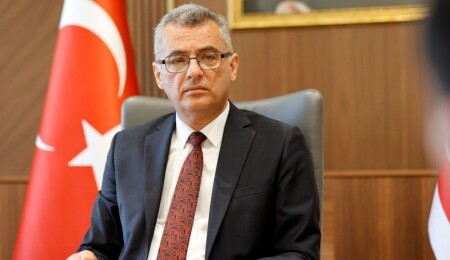
President Tufan Erhürman said the Turkish Cypriot side had entered the right diplomatic track to overcome the deadlock in the Cyprus problem and that he remained “hopeful,” stressing that they were ready to make progress on all seven issues highlighted by the UN Secretary-General.
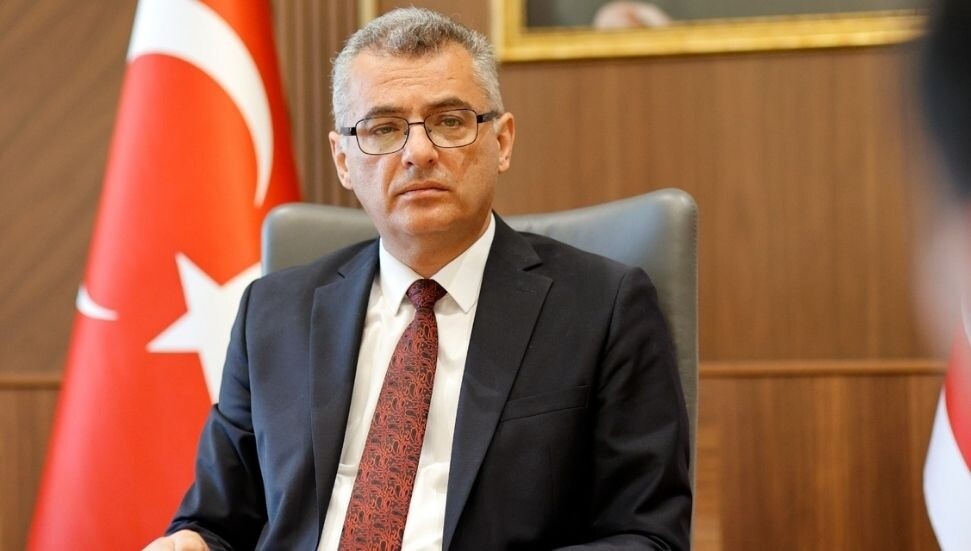
Erhürman gave an extensive assessment of key issues on the agenda, ranging from the ferry disaster off Kyrenia and the crisis of merit and oversight in the public sector to controversial appointments, the decision to hold early elections, the fake diploma scandal and the latest contacts on the Cyprus problem.
Speaking on the new-season opening episode of Haber Toplantısı, jointly broadcast by Kanal Sim and YENİDÜZEN and hosted by Mert Özdağ and Ertuğrul Senova, Erhürman made notable remarks on the government’s performance, the decision to hold the two elections on the same day and his contacts with Greek Cypriot leader Nikos Christodoulides.
“The Turkish Cypriot Side Is Ready on All Seven Issues… Would Children Playing Football ‘Upgrade’ the TRNC?”
Referring to the seven areas on which UN Secretary-General António Guterres expects progress during his contacts, Erhürman said the Turkish Cypriot side’s position was clear on crossing points, mine clearance, citizenship for children of mixed marriages, sports, joint disaster response and a joint mechanism to combat irregular migration:
“We are ready to make progress on all seven issues. We are already ready on six of them; there are some problems regarding the seventh, new crossing points, and we are ready to overcome those as well. But Mr. Christodoulides says, ‘I do not want measures that would amount to upgrading the TRNC.’ Would 11- or 12-year-old children playing football, or establishing a disaster-response mechanism, upgrade the TRNC or lead to its recognition? We cannot stomach children being prevented from playing sports or youth festivals in Kyrenia and Nicosia being cancelled under diplomatic pressure based on made-up concepts such as ‘recognition by implication.’”
Erhürman said the Turkish Cypriot side had already declared its readiness to provide assistance in the event of any disaster in the south.
“I hope there will be no disaster in either the south or the north. But if something happens, I am giving a blank cheque in advance: We are ready to provide every kind of assistance. We will not turn this into diplomatic leverage by making a phone call every time an incident occurs,” he said.
“We Are at the Table, But Not at the Negotiating Table; We Are at the Dialogue Table”
Erhürman said he would meet UN Secretary-General Guterres in New York at the end of the month, adding that during his 10.5 months in office they had moved onto the right diplomatic track.
Reminding that a formal negotiation process had not yet begun and that the current process was a “dialogue table,” Erhürman said they were opposed to convening an inconclusive 5+1 meeting.
“We do not have the right to put Turkish Cypriots and Greek Cypriots through again what we experienced with the 2004 Annan Plan and at Crans-Montana in 2017. The Secretary-General has also come around to the point we have been making and has made it clear that he will not convene an inconclusive 5+1 meeting without progress on confidence-building measures, methodology and substance,” he said.
Asked If He Was Still Hopeful: “I Am Hopeful Because We Are on the Right Track”
Responding to a question about whether he remained hopeful about the Cyprus problem amid the negative atmosphere reported following the leaders’ private meetings, Erhürman said he had maintained his hopeful stance.
“I said I was hopeful for a specific reason, and I remain at the same point. My hope is not because Mr. Christodoulides and I get along very well or have grown very close. We have held contacts in 10.5 months that could not be held in the previous five years; we can talk to each other,” he said.
“Mr. Christodoulides was saying, ‘Let’s start from where we left off at Crans-Montana.’ We explained that trust had eroded over nine years, and that confidence-building steps should come first, followed by methodology and, finally, negotiations. Today, the UN Secretary-General has also arrived at this three-part track that we identified. I am hopeful because we have entered the right path. A solution is not only a need for Turkish Cypriots; the lack of a solution is costing both communities.”
“Political Equality Is Not a Give-and-Take Issue”
Reiterating that the methodology should be established from the outset rather than simply resuming from where the sides left off at Crans-Montana, Erhürman stressed the importance of political equality and a rotating presidency.
“The first item in the methodology is political equality. Political equality is not something to be granted to us or a matter of give-and-take; it is the core of making a settlement viable. If a partnership state is to be established, you cannot write into the constitution from the outset that a Turkish Cypriot can never hold the presidency of that structure. That was not the case in the 1960 Constitution either, and it collapsed. The ratios of rotation — one to two or one to three — can be negotiated, but political equality as a principle must be accepted,” he said.
“The Secretary-General Has Drawn the Right Road; We Are Ready to Walk It”
Erhürman also referred to the risk of conflict in the region and the UN Secretary-General’s warnings about regional stability. Criticizing the administration in the south for escalating tensions through military agreements, he concluded:
“When the Secretary-General came to the island, he explicitly spoke about regional security risks and dangers. In such an environment, you cannot sign military agreements and then talk about a ‘favourable climate for peace.’ We are engaged in diplomacy and dialogue. The Secretary-General has drawn the right road; we are ready to walk it. But where the road will take us, we will see as we walk.”
Erhürman said he was deeply saddened by the overall situation in the country.
“We are experiencing deprivation amid abundance. I am extremely saddened, and it pains me to see people who lack the necessary expertise in the field while highly qualified professionals remain idle,” he said.
Erhürman stressed that the state had mobilized all available resources to locate the 14 people still missing following the ferry disaster off Kyrenia, adding that there had been serious negligence in the incident.
Pointing to the crisis of merit in the public sector, Erhürman said for the first time that he had not signed every appointment decree submitted to him. He also expressed full confidence that those bearing criminal responsibility in both the ferry disaster and the fake diploma scandal would be held accountable before the courts.
Erhürman said a comprehensive action plan was needed to combat violence against women and argued that holding the local and general elections on the same day would create serious technical and democratic problems.
Turning to the Cyprus problem, Erhürman said the situation of children from mixed marriages was not a matter of granting a favour but a human rights violation. He reiterated that the Turkish Cypriot side was ready to make progress on all seven issues identified by the UN Secretary-General and made clear that political equality could never be a matter of give-and-take.
“Our Hope Is to Reach the 14 Missing People as Soon as Possible”
Erhürman said maximum efforts were being made in the search-and-rescue operation launched after the ferry disaster, adding that the newly deployed vessel had the technological capability to reach greater depths.
Drawing attention to the psychological trauma suffered by the families, Erhürman said:
“The state has to do everything it can to reunite people with those they are searching for. Our wish and our hope is to reach the remaining 14 people as soon as possible.”
Erhürman said serious negligence had become apparent when the events immediately preceding the disaster were examined.
“If we go back just one minute before the incident, everyone in the public now knows that there were quite a few problems there. Everything required by civilisation and science must be reassessed, and this area must be brought under a new regulatory framework not only on paper but also in terms of implementation,” he said.
“Merit, Standards and Oversight Have Become Vital… I Did Not Sign Every Paper Sent to Me”
Erhürman said the mechanisms of standards, merit and oversight had broken down in the country, stressing the vital importance of all three for public administration.
“If there is no merit, it is impossible to know or implement what standards need to be established and how oversight should be carried out. I hope these words will not be discussed for 15 days after this disaster and then disappear,” he said.
Referring to bureaucratic appointments submitted to the Presidency, Erhürman said for the first time that he had not signed every appointment decree placed before him.
“I did not sign every paper that came to me, let me at least say that. There were appointment choices that I did not sign and that were subsequently changed. At the Presidency, we do not limit ourselves to legality. We ask: ‘Is it legally compliant? Yes. But is this person suitable for the job in terms of their profession, expertise and seniority?’”
Emphasizing that ministerial changes in the cabinet should not be confused with bureaucratic appointments, Erhürman said ministerial appointments were a matter of political discretion and that the public would hold those responsible to account at the ballot box.
At the level of undersecretaries, he said, he considered the appointee’s merit and technical competence.
“I look at legality and merit. But the question ‘Can this person really perform this job?’ is no longer mine to answer at that stage. The discretion then belongs to the Prime Minister’s Office, because political responsibility remains with the Prime Minister’s Office,” he said.
Criticizing political appointments to technical departments through the three-signature decree system, Erhürman recalled the public-sector reform bill prepared during his time as prime minister to abolish the system.
“A lawyer can perform administrative duties, but cannot simply become director of the Meteorology Department or the Department of Antiquities. Positions requiring technical expertise should be filled on merit through the Public Service Commission,” he said.
“We Are Experiencing Deprivation Amid Abundance… It Pains Me”
Erhürman openly expressed his deep concern about the overall direction of the country.
Asked how he viewed the state of the country, he said:
“As for how I see the country… I am extremely saddened. A lot of things are happening one after another, but this cannot be explained simply by coincidence. There is a general state of disorder in the country, and we are experiencing its consequences. Wherever you look, our criteria and standards are gradually disappearing; merit is disappearing, and we are drifting toward a position where oversight is deficient. When these three come together, it would hardly be possible to say that I see the country in a good state.”
Erhürman said society had a very strong pool of human capital but that people lacking sufficient expertise were working in the field instead of qualified professionals.
“The most painful thing is that we are experiencing deprivation amid abundance. This is where it really pains me: We have such strong human capital, but these people are not the ones running things. We have many highly qualified professionals, yet they remain idle while less qualified people are out in the field,” he said.
Saying the crisis of merit was not limited to public administration, Erhürman also sharply criticized the media.
“Are there people in this country who do not know how to write the suffixes ‘-de/-da’ separately and yet walk around calling themselves journalists? Yes, there are. There is also a problem of standards, oversight and merit in the media. We used to encourage children aged seven or eight to read daily newspapers as part of their daily affairs lessons. Now you are afraid that when your child picks up a newspaper, their Turkish will deteriorate or they will be exposed to violence.”
Erhürman also stressed that it was misleading to portray politics as a completely separate and abstract sphere detached from society.
“To completely separate politics from the public and say ‘the problem is only there’ is precisely the definition of populism. Politics and society are highly interconnected. We also need to develop a culture in which people can say, ‘I’m sorry, I am not qualified to do this job,’” he said.
“I Have Full Confidence That Those Criminally Responsible Will Be Punished”
Explaining that responsibility in the crises that had occurred could be divided into political, criminal and administrative responsibility, Erhürman expressed his confidence in the judicial process.
“People sometimes look at me as if I am living in a dream world when I say this, but I am saying it very clearly: I have not the slightest doubt that those bearing criminal responsibility in both the fake diploma case and this ferry disaster will be punished. At this level, I have full confidence in the judiciary of this country,” he said.
Recalling that issues such as permits at the port, the functioning of inspection boards and approval of the captain’s licence were subject to an administrative investigation, Erhürman said he would personally follow the administrative reports to be commissioned by the Prime Minister’s Office. He added that the public would hold those bearing political responsibility to account through democratic means.
“A Multidimensional Action Plan on Violence Against Women Is Essential”
Referring to the series of femicides in recent months, Erhürman said the issue could not be solved solely through criminal legislation.
“What I read, see and hear frightens me. Our vision should be ‘zero loss of life’ and ‘zero violence.’ Laws and their implementation are of course important, but we need a comprehensive action plan that also covers women’s economic independence and both formal and non-formal education. Cultural development is a fundamental element in a society getting back on its feet, and we have to confront our cultural problems,” he said.
“Holding the Two Elections on the Same Day Is Problematic Both Technically and Democratically”
Erhürman said he had warned three months earlier about the government’s decision to hold the general and local elections on the same day and still considered it wrong, pointing to both technical and constitutional concerns.
“The President of the Supreme Court has clearly said that this will be extremely difficult for the High Election Board. Even if the mixed voting system is abolished, when a voter enters the polling station, they will vote for a member of parliament, mayor, municipal council member and mukhtar. It is difficult to predict how many minutes it will take someone to leave the voting booth and how long the counting will take. Even the spread of rumours because of a prolonged count is something that should never be preferred from the standpoint of this country’s democracy,” he said.
Erhürman stressed that the framers of the Constitution had deliberately placed local and general elections in different periods, arguing that mixing the dynamics of local elections with the general political atmosphere could undermine voters’ democratic will.
“The Situation of Children from Mixed Marriages Is Not a Confidence-Building Measure but a Human Rights Violation”
Turning to issues related to the Cyprus problem, Erhürman said they continued to raise the issue of identity and European Union citizenship for children born to mixed marriages on international platforms.
Criticizing Greek Cypriot leader Nikos Christodoulides for treating the issue as a favour or a matter of unilateral discretion, Erhürman said:
“Mr. Christodoulides says, ‘I grant a certain number at each Council of Ministers meeting.’ We are not at the ‘pick and choose’ stage. All of these children are entitled to these rights. This is not a confidence-building measure; it is a clear human rights violation. We have young people who have lost scholarships and university admissions because of this issue. EU citizenship for children of mixed marriages is one of the seven issues personally identified by UN Secretary-General Guterres. We are determined to pursue this iss
Comments
Attention!
Sending all kinds of financial, legal, criminal, administrative responsibility content arising from illegal, threatening, disturbing, insulting and abusive, humiliating, humiliating, vulgar, obscene, immoral, damaging personal rights or similar content. It belongs to the Member / Members.