

İncirli Outlines Five Priorities, Cites Polls: CTP Set to Secure Majority in Parliament
Republican Turkish Party (CTP) Chairwoman Sıla Usar İncirli has outlined her party’s priorities in the areas of combating corruption, the economy, healthcare and education, public services, population and immigration, and security. İncirli also said CTP was “by far the leading party.”
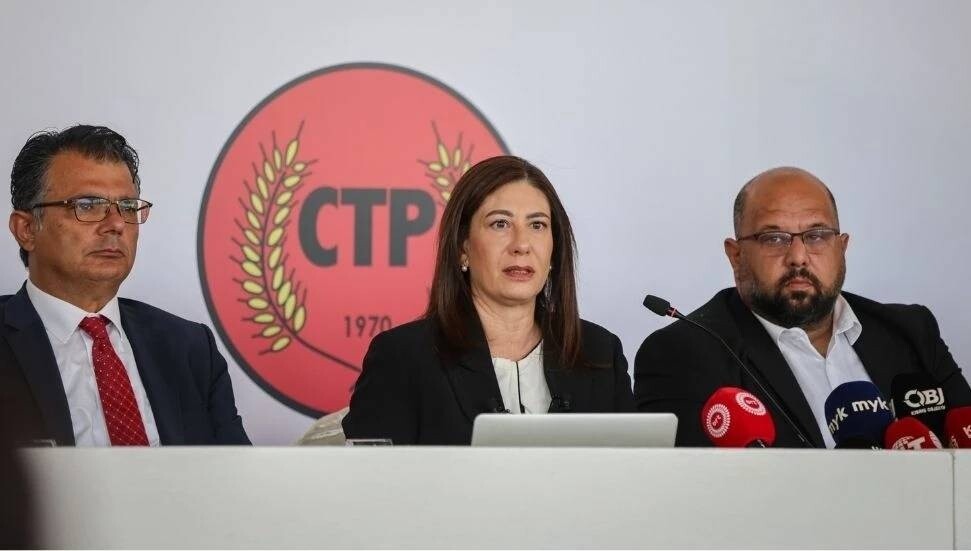
Speaking at a press conference titled “Now It’s Our Turn,” CTP Chairwoman Sıla Usar İncirli outlined her party’s goals for the new period, its Common Future Programme, and the five areas it would prioritize if it came to power.
Opening her remarks by saying “Our country is entering a new period,” İncirli said CTP stood for honesty, equality, justice and democracy. She said good governance, merit, transparency and accountability were also among the party’s core principles, adding that investigating corruption, exposing irregularities and taking the necessary action constituted “holding people accountable.”
İncirli said CTP’s other commitments were to work, produce, move forward and provide services. She said the country’s resources would be used for its people and that the party aimed to build a productive and stronger economy.
Saying that the future of young people, the hopes of children and workers’ rights were also among their priorities, İncirli said: “Because we are the workers. We are the producers. We are young people, women and retirees. We are the people of this country. We are the public.”
İncirli announced CTP’s new slogan as “Now It’s Our Turn: Honest Governance, Strong Services, A Secure Future.”
“THE PEOPLE’S DESIRE FOR CHANGE IS VERY CLEAR”
İncirli said the public’s desire for change was clear, stressing that this expectation was not limited to simply changing the political party in government.
She said people wanted the country’s deterioration to be reversed, problems to be solved and the future to be viewed with confidence.
Arguing that the current disorder imposed “lack of control, arbitrariness, lack of merit, partisanship, corruption, an unaccountable approach to governance and disasters,” İncirli said: “We will change this.”
Saying the new period would be “the people’s government,” İncirli said they had come to restore, one by one, the values she claimed had been lost through bad intentions and poor governance, rebuild institutions and shape the future themselves.
She said their first task would be to stop the deterioration, followed by repairing institutions and improving public services. İncirli said they would bring the country’s knowledge base, skilled human resources, production capacity and institutional experience into governance, and build the future together through lasting reforms, investments and new policies.
İncirli also said they would continue to defend the community’s existence and the democratic will that forms part of its identity.
She said they would work together with every citizen who wanted to protect the country’s identity and character, shared social values, and its economic, social and cultural assets.
“COMMON FUTURE PROGRAMME IS READY”
İncirli announced that they had begun presenting their Common Future Programme, prepared with broad participation from experts, academics, sector representatives, professional organizations, civil society organizations and political cadres.
She described the programme’s main commitment as “Trust in Governance, Stability in the Economy, Growth in Production.”
İncirli said their goal was to build a fair, productive, resilient and liveable country, adding that the problems facing the country were interconnected.
According to İncirli, distrust in public administration weakens predictability in the economy, while economic instability puts pressure on production, employment and purchasing power. She said weakness in production limits public revenues, social security, healthcare and education services, while uncertainty over population figures makes planning difficult in everything from schools and hospitals to housing and transport.
“Interconnected problems cannot be solved with disconnected promises,” İncirli said, adding that a solution required a strong programme bringing together priorities, timelines, resources, responsibilities and measures of success within a single framework.
She said the Common Future Programme focused on governing the country well, strengthening institutions and improving quality of life. At the same time, she said, they remained committed to the will for a solution and peace in Cyprus, institutional preparations for EU membership and a vision of integration with the world.
İncirli said these were integral parts of their political vision for the common future. The programme covers the economy, public administration, healthcare, education, production, working life, energy, the environment, population and immigration, and social policies.
She added that they would continue presenting the programme to relevant stakeholders and across the country.
“RELATIONS WITH TURKEY WILL BE BASED ON MUTUAL RESPECT AND INSTITUTIONALISM”
İncirli said relations with the Republic of Turkey would be conducted on the basis of “mutual respect and institutionalism.”
She said economic and financial relations would be structured to strengthen the capacity of the country’s own institutions, support production and investment, and contribute to long-term development.
İncirli said they would not ignore limitations arising from external conditions, but would build strong institutions within their own areas of responsibility, manage public finances with discipline, increase production capacity and strengthen economic resilience.
She said a structure in which Turkish Cypriots confidently managed their own institutions, developed their economic and social strength and integrated with the world would also form the basis of external relations.
“DECEMBER 6 WILL BE A BIG DAY”
İncirli said little time remained before the elections through which the public would bring about the change it wanted.
She said the country was heading to elections and that it appeared the local and general elections would be held together on December 6.
İncirli claimed that voters would use their choice in both local and general elections in favour of good governance, saying they would rid the country of what she described as years of poor administration and make a new push forward.
She said they would work together with every citizen, regardless of background or political views, who loved the country and wanted to protect its identity and culture.
“WE HAVE ACHIEVED GREAT THINGS LOCALLY”
İncirli said they were preparing for local elections alongside the general election, adding that the public had seen the difference CTP had created in local government.
She claimed that CTP municipalities had demonstrated strong governance in terms of financial discipline, transparency, social municipal services, infrastructure investment, environmental policies and service quality.
She said municipalities taken over under difficult circumstances had first stopped financial and institutional deterioration, then strengthened service capacity and opened the way for new investments.
İncirli said local governments had demonstrated that results could be achieved even under the most difficult circumstances through proper planning, strong teams, financial discipline and an approach based on governing together with the public.
She also announced that they had completed a Local Government Vision Workshop on September 5-6 with broad participation.
İncirli said they would unveil their New Period Local Government Vision in the coming days.
“Now we are taking the strong service approach we have implemented locally to the governance of the entire country,” she said.
“CORRUPT GOVERNANCE WILL GO”
İncirli said the coming change would not simply mean replacing the political party in government.
“The rule of a narrow interest group will come to an end,” she said, adding that the country would be governed through rules, merit, planning and accountability.
Continuing her criticism of the current administration, İncirli alleged that public power and authority had been abused for personal gain.
She claimed that allegations of bribery and corruption, irregularities, favouritism, partisanship, bid-rigging and waste of public resources had reached “extreme levels.”
İncirli argued that transparency had been replaced by “secret dealings,” merit by “incompetence,” rules by “arbitrariness,” and institutional relations by personal-interest networks.
She said fraud and deception had seriously eroded public trust in politics and public administration.
“This system will change,” İncirli said, adding that their priority was to restore public trust in government.
She said the state would once again be governed according to rules, public resources would be used for the benefit of society, decision-makers would explain their reasons and those using public funds would be held accountable.
“CTP GOVERNMENT WILL BE INCLUSIVE AND UNIFYING”
İncirli said a CTP government would be more than simply a change of government, describing it as a strong form of popular government bringing together different segments of society around common goals and a common future.
She said the public’s desire for change was clear and that they had seen this both on the ground and in opinion polls.
İncirli said they had regularly commissioned opinion polls during the presidential election period but had chosen not to publish the results.
She said the surveys were not a propaganda tool for CTP but a means of accurately understanding social trends, expectations and sensitivities.
Arguing that some figures of unclear origin, methodology and sample had recently been circulated publicly, İncirli said they therefore considered it necessary to share some information about the latest picture in their possession.
CTP POLL: “BY FAR THE LEADING PARTY” WITH ENOUGH SUPPORT TO SECURE A PARLIAMENTARY MAJORITY
İncirli said Metron Public Opinion Research Company had conducted three nationwide surveys in February, May and August at CTP’s request.
She said the latest survey was conducted nationwide between August 15 and 24 with a sample of 1,000 people, adding that the basic picture had not changed across the three surveys.
İncirli claimed the surveys showed CTP was “by far the leading party,” maintaining its strong position with enough support to secure a majority in Parliament and preserving its vote gap over all other parties.
She also said CTP’s support was not limited to a particular segment of society, claiming that citizens from different sections of society, age groups and political orientations were coming together around CTP.
İncirli said their aim was not to establish a government in which one section of society prevailed over another, but an inclusive administration in which broad sections of society felt represented, trusted the government and took ownership of their common future together.
She claimed public opinion polls also showed that society was ready for such an approach.
“OUR FIVE PRIORITIES FOR THE NEW PERIOD”
İncirli announced five priorities that they would begin implementing from their first day in office.
She recalled that they had previously called Parliament into an extraordinary session on public safety and subsequently published an eight-point Public Safety Action Plan. She also said they had announced a 10-point Maritime Programme following the ferry disaster.
İncirli said the five areas did not represent the entirety of the Common Future Programme, but rather the initial priorities they would activate if they came to power. She said each measure would work together with other areas of the programme and contribute to common objectives.
Describing the press conference itself as an example of how they would govern in the coming period, İncirli said: “We will not make decisions behind closed doors and announce them later. We will plan, share with our people and be accountable. That is exactly what we are doing here today.”
FIRST COMMITMENT: GOOD GOVERNANCE, HONEST GOVERNANCE AND THE FIGHT AGAINST CORRUPTION
İncirli said they would launch a comprehensive fight against corruption in the new period, adding that their first task would be to rebuild trust in governance.
She said one of the first major steps of the new period would be combating corruption, which she defined as the abuse of public power or authority for personal gain.
İncirli said that although corruption might be perceived as a series of isolated incidents, its impact on society was layered and multidimensional.
She argued that corruption carried a major cost for the country, affecting not only stolen or misused resources but also economic growth, public finances, income distribution, institutional trust and social welfare.
İncirli said that in a country where relationships rather than rules determine outcomes, honesty eventually begins to be viewed as “naivety,” and that this was where the real decay began.
CONSEQUENCES OF CORRUPTION
İncirli said the first consequence of corruption was the waste of public resources.
She claimed tenders became inflated, the cost of investments increased, and resources that should have been allocated to healthcare, education, infrastructure and social services were diverted elsewhere.
Bribery, arbitrary decisions and uncertainty, she said, damaged the investment environment, weakened employment, growth and competitiveness, and increased unemployment.
“The citizen pays the price,” İncirli said, arguing that access to public services could cease to be a right and become dependent on personal connections, power and economic circumstances.
She said citizens who believed institutions did not act fairly could stop voluntarily complying with the law, while informality and tax evasion could become normalized.
İncirli said the erosion of merit would weaken public services and could lead to serious problems in healthcare, education, oversight, emergency management and security.
She warned that if corruption went unpunished, quick and easy gains could become normalized and corruption could develop into a self-perpetuating system.
She said citizens could eventually stop expecting solutions from the state and begin seeking their own ways forward.
İncirli added that the country would lose human capital as educated and skilled people, particularly young people, emigrated.
ANTI-CORRUPTION AUTHORITY TO BE ESTABLISHED
İncirli said fighting corruption was not about “removing a few rotten apples,” and announced that they had prepared a comprehensive Anti-Corruption Strategy and Action Plan based on political will and institutional reform.
She said the goal was not merely to investigate corruption, but also to work on prevention, education and public awareness.
The anti-corruption measures announced by İncirli include:
- An Anti-Corruption Authority will be established. The authority will complement rather than replace existing institutions. It will operate transparently and inclusively and coordinate with other oversight bodies.
- Asset declarations will be audited. Effective auditing of the asset declarations of elected officials and senior appointees carrying significant financial and administrative responsibilities will be introduced.
- Oversight institutions will be strengthened. The Court of Accounts, the Financial Inspection and Review Board and other relevant oversight units will be strengthened and made more active. E-inspection and digital auditing will be developed.
- Legislation will be updated. Amendments will be made to relevant legislation, particularly the Public Procurement Law and the Law on the Prevention of Laundering Proceeds of Crime, Financing of Terrorism and Financing the Proliferation of Weapons of Mass Destruction.
- Coordination will be led by the Prime Ministry. Coordination among all institutions involved in combating corruption will be ensured at the level of the Prime Ministry.
İncirli said they also had a timetable for fighting corruption, adding that public tenders and spending would be transparent, traceable and auditable under the new administration.
She said public resources could not be used for show, privilege or political extravagance, adding that accountability for past actions should be pursued by independent institutions and courts rather than by politicians.
“Our job is to establish those institutions and clear the way for them,” İncirli said.
She said they would change the system rather than reduce the fight against corruption to individual cases, establishing a permanent mechanism through strong oversight, transparency, effective asset-declaration controls and inter-institutional coordination.
İncirli concluded this section by saying: “Now It’s Our Turn: Citizens will trust the government.”
SECOND COMMITMENT: A GROWING ECONOMY AND FIGHTING THE COST OF LIVING
İncirli said the cost of living was among the most serious problems affecting people’s daily lives, adding that people were struggling to make ends meet despite working and that wage increases were quickly eroded by rising prices.
She said the burden was not limited to wage earners, with tradespeople, producers and businesses also facing rising costs, inflation and declining purchasing power.
İncirli said shrinking profit margins, declining appetite for investment and the increasing difficulty of maintaining businesses meant that protecting purchasing power permanently required wages, production, competition, market oversight, energy costs, the fight against informality and targeted social support to be managed as part of a single economic policy.
“This problem cannot be solved through patchwork measures and day-to-day decisions,” she said, arguing that there was currently no economic policy, but rather decisions aimed at simply getting through the day.
İncirli said the economy now needed to be managed through planning.
She said their goal was not growth figures that failed to reflect reality, but genuine development in which growth was reflected in workers, families, tradespeople and younger generations.
She said the economic backbone of the new period would be “a productive economy, resilient public finances and secure employment.”
“A COMPREHENSIVE FIGHT AGAINST THE COST OF LIVING”
İncirli said they would tackle the cost of living comprehensively by regularly monitoring prices and basic production costs, while strengthening market oversight and competition.
She said social assistance would be directed toward those genuinely in need and that they would reduce the uncontrolled impact of external economic shocks on consumers.
“PUBLIC FINANCES WILL BE MANAGED THROUGH PLANNING”
İncirli said they would manage the budget, debt and cash flow according to clear targets under a medium-term fiscal programme.
She said they would reduce low-impact spending and direct resources toward priority public services, value-added investments and infrastructure.
Reliable data, fiscal transparency and predictability would be the guiding principles, she added.
“ENERGY COSTS WILL BECOME PREDICTABLE”
İncirli said they would address a fair and predictable tariff structure alongside security of supply, renewable energy, storage and energy efficiency.
She said they would accelerate investments aimed at structurally reducing energy costs for households and businesses.
“TAX FAIRNESS AND THE FIGHT AGAINST INFORMALITY”
İncirli said they would ensure tax fairness and effectively combat the informal economy.
She said they would broaden the tax base and end the practice of placing the burden repeatedly on the same registered taxpayers.
She also said they would establish an effective auditing system integrating tax, customs and social security data.
“LOCAL PRODUCTION AND INVESTMENT WILL BE SUPPORTED”
İncirli said they would increase domestic added value and provide results-oriented support for production and investment.
She said sectoral strategic development plans would expand technology investments, R&D, domestic production chains and skilled registered employment.
She added that they would strengthen links between domestic production and other sectors of the economy, from tourism and higher education to trade and construction.
Public support would be tied to clear targets, defined timeframes and measurable results, she said, adding that support producing no results would not be continued.
“AN ECONOMY WHERE WORKERS SHARE IN GROWTH”
İncirli said they would expand registered and secure employment, ensure social security contributions were declared based on actual wages and strengthen the revenue base of the social security system.
She said economic growth would be felt not only in figures but also in wages, employment, businesses and household welfare.
“SUSTAINABLE FISCAL AND DEBT MANAGEMENT”
İncirli said public debt would be managed not through short-term borrowing aimed at getting through the day, but through a predictable and sustainable fiscal management approach.
She said they would reduce the pressure created by short-term borrowing and exchange-rate risks arising from foreign-currency liabilities.
Rather than attempting to solve the debt problem solely through new borrowing or spending cuts, İncirli said they would manage spending quality, income fairness, the fight against informality, debt and cash management, and fiscal risks within the same medium-term fiscal programme.
She said their goal was to establish transparent and predictable debt and cash management that would strengthen public finances, anticipate borrowing needs and fiscal risks.
İncirli concluded this section by saying: “Now It’s Our Turn: Those who produce will prosper, and workers will receive their share of growth.”
THIRD COMMITMENT: PUBLIC TRANSFORMATION IN HEALTHCARE AND EDUCATION
İncirli said healthcare and education were the two most fundamental pillars of the welfare state and the common future.
She said they had three main objectives in healthcare: ensuring every patient received the right healthcare at the right time; permanently reducing the burden of healthcare costs on household budgets; and guaranteeing uninterrupted and secure access to medicines.
She said these goals would be achieved not through temporary and fragmented interventions but through a public transformation strengthening the healthcare system from top to bottom.
Arguing that long queues and overcrowding in hospitals were not accidental, İncirli said people were forced to go directly to hospitals when they needed healthcare because there was no strong primary healthcare system.
“As long as hospitals remain the first stop in the healthcare system, neither the queues will end nor the burden on hospitals will decrease,” she said.
HEALTHCARE ROADMAP: PRIMARY CARE TO BE STRENGTHENED
İncirli said they would turn health centres into fully equipped facilities with doctors, laboratory services and X-ray capabilities, while strengthening preventive healthcare and early intervention.
She said they would rebuild the healthcare system around appropriate levels of care, with hospitals no longer serving as the first stop but as the final point of referral when necessary.
TRIAGE SYSTEM IN EMERGENCY DEPARTMENTS
İncirli said a standardized triage system would become mandatory in all public hospitals.
Patients who were not in life-threatening condition would be directed to a separate service pathway, she said.
The aim would be to ensure that patients genuinely requiring emergency intervention received care without delay, with priority in emergency departments determined by urgency.
“ACCESS TO MEDICINES FROM THE NEAREST PHARMACY”
İncirli said they would establish a Medicine Tracking System monitoring every stage from the entry of medicines into the country until they reached patients.
She said the system would take advance measures against shortages and supply problems and provide uninterrupted and secure access to medicines.
Medicines would be supplied under pharmacists’ advice and assurance and made available to patients through the nearest pharmacy, she said.
“PREVENTIVE HEALTHCARE WILL BE STRENGTHENED”
İncirli said they would reopen diabetes centres that had been closed and ensure regular monitoring of patients with chronic diseases.
She said mobile screening units would increase opportunities for early diagnosis, aiming to control diseases before they progressed and before hospitalization became necessary.
“A DIGITAL HEALTH SYSTEM WILL BE ESTABLISHED”
İncirli said they would establish a digital health system allowing authorized doctors to securely access patients’ medical histories, laboratory results and imaging records.
She said this would make it possible to monitor diseases continuously.
“FULL-DAY WORKING MODEL TO BE DEVELOPED IN HEALTHCARE”
İncirli said they would plan human resources based on scientific data and fill shortages in specialist fields and staffing positions according to a publicly announced timetable.
She said they would develop a full-day working model distributing outpatient, laboratory, imaging, surgical and consultation services more evenly throughout the day at public hospitals.
The transformation would be implemented gradually with stakeholder organizations while protecting workers’ rights, she added.
“UNIVERSAL HEALTH INSURANCE WILL BE INTRODUCED”
İncirli announced that Universal Health Insurance would be introduced gradually.
She said the goal was to establish a financially sustainable and accountable Universal Health Insurance system through which everyone could access the healthcare services they needed.
QUALITY TRANSFORMATION PROGRAMME IN EDUCATION
İncirli said they would implement a Quality Transformation Programme in education, setting out the goal of “more development at school, not simply more time.”
She said they aimed to ensure every child in the country had access to quality education regardless of family income or where they lived.
GRADUAL TRANSITION TO FULL-DAY EDUCATION
İncirli said they would gradually transition to full-day education under a five-year transformation plan.
She said this would not simply mean extending school hours, but would constitute a comprehensive reform aimed at improving the quality of the education system and the time children spend at school.
The transition would be planned by considering school infrastructure, teachers and other human-resource needs, and financial capacity together, she said, adding that investments in transportation, nutrition and safe outdoor spaces would also be planned.
İncirli said a five-year gradual timetable would be implemented alongside population data, with the aim of providing children with a higher-quality, safer and stronger full-day educational environment once the necessary infrastructure and human resources were in place.
“A STRONG START: NO CHILD WILL BE LEFT BEHIND”
İncirli said they aimed for 100% preschool enrolment among four-year-olds.
She said they would build an education system in which children could understand what they read, express themselves in writing and speech, think mathematically and reason scientifically.
She said they would adopt a zero-tolerance policy toward violence and bullying in schools and transform education from a system that simply transfers knowledge into one that develops individuals who understand, question, apply, produce and work together.
EDUCATION AND EMPLOYMENT: “A GENERATION THAT CREATES JOBS, NOT LOOKS FOR JOBS”
İncirli said they would align vocational and technical education with the real needs of working life and strengthen the link between education and employment.
She said cooperation among schools, businesses, professional organizations and higher education institutions would be strengthened, with systems for quality internships, workplace training and graduate tracking established.
QUALITY FIRST IN HIGHER EDUCATION
İncirli said quality rather than quantity would be prioritized in higher education.
She said quality assurance, programme accreditation, strong academic staff, research capacity, student rights, ethical standards and international credibility would become the foundations of higher education.
She said universities would be supported in becoming institutions producing research, innovation, culture and social development, while strong oversight mechanisms would be used to combat fake diplomas and restore the reputation of universities.
INCLUSIVE EDUCATION
“Special education is not a favour; it is a fundamental right,” İncirli said.
She said special education would no longer be treated as a separate and limited area of service and that inclusive education would become the shared responsibility of all schools.
She said they would establish a comprehensive system in which young people with special needs would not be left alone after education, with their transition to vocational training and working life also supported.
“THE TEACHER’S SCHOOL”
“Quality education begins with quality teachers,” İncirli said.
She said continuous professional development would be considered an integral part of the teaching profession.
She added that they would preserve the historical and social heritage of Atatürk Teacher Training Academy while strengthening teacher training, educational research and assessment capacity.
“EDUCATION WILL BE REMOVED FROM POLITICS”
İncirli said education decisions would be made through collective wisdom rather than behind closed doors.
She said they viewed education as a fundamental public right based on secularism, science, democracy, inclusion and equal opportunity.
Education policies would be based on scientific data and academic merit, while decision-making processes would be made participatory, transparent and accountable, she added.
İncirli concluded this section by saying: “Now It’s Our Turn: Planned and gradual institutional transformation in healthcare and education.”
FOURTH COMMITMENT: LESS BUREAUCRACY, FASTER AND STRONGER PUBLIC SERVICES
İncirli said the public sector’s role was to serve citizens rather than exhaust them.
She said they would reduce bureaucracy and make public services faster, simpler and more predictable.
She said they would end a system in which citizens and businesses had to repeatedly provide the same information to different institutions without knowing where an application stood or when it would be completed.
Application, permit, licence, payment and document processes would be reviewed from beginning to end, she said, with unnecessary documents, approvals and procedural steps eliminated.
“A DIGITAL GOVERNMENT SYSTEM WILL BE ESTABLISHED”
İncirli said they did not view digital government simply as transferring existing bureaucracy onto computers.
They would first simplify procedures and then establish an integrated digital system through which public institutions could communicate with one another.
She said they would clarify duties and powers in public administration, strengthen inter-institutional coordination and make decisions based on data.
Success would be measured through shorter processing times, improved service quality and citizen satisfaction, she said.
İncirli said they would identify duplicate responsibilities, gaps in authority, unnecessary approval stages and overlaps between institutions, while supporting the professional development of public employees.
She announced that they would implement a reform protecting qualified public employees, eliminating political pressure and improving service quality.
“Now It’s Our Turn: Less bureaucracy, stronger, faster and higher-quality public services,” she said.
FIFTH COMMITMENT: POPULATION, IMMIGRATION AND SECURITY
İncirli said no healthy planning was possible in areas ranging from education and healthcare to housing, transport, employment and infrastructure without reliable information about the size and composition of the population.
She announced that a comprehensive population census would therefore be conducted.
“A COMPREHENSIVE POPULATION CENSUS WILL BE CONDUCTED”
İncirli said the comprehensive population census would be completed within a 15-18 month timetable, including preparations.
She said annual reports on population, migration and public-service capacity would be published for the public.
A Demographic Inventory and Unified Population Data System would be established, she said, adding that existing data would first be consolidated.
İncirli said the comprehensive census would be published with key indicators such as age, gender, region, economic activity, education and residency status.
She said the Spatial Address Registration System would be developed so that all investments, from education and healthcare to housing and infrastructure, could be planned according to actual population data.
ELECTRONIC PRE-NOTIFICATION AND SECURITY SCREENING AT ENTRY
İncirli announced that an electronic pre-notification and proportionate security screening system would be established at entry points.
Tourist, work, student, residency and family-reunification statuses would be tracked through the same digital registration chain, she said.
She said a clear and gradual status system would be established for employment, residency and long-term settlement.
Permits would be managed in line with labour-force needs, social security coverage, public-service capacity, registered employment and fundamental rights, İncirli said.
She said a Digital Status Card and Early Warning System would make it possible to monitor who was in the country, under which status, where they were staying and for how long.
“A LABOUR POOL WILL BE ESTABLISHED”
İncirli said a Labour Pool would allow work permits and the labour force to be planned according to the country’s actual needs.
She said employers, universities and intermediary agencies would also be included in the oversight system and that they would effectively combat undocumented living and working.
“RESIDENCY AND CITIZENSHIP WILL BE RULE-BASED”
İncirli said residency and citizenship would be governed by clear rules.
She announced that they would restrict the Council of Ministers’ authority to grant exceptional citizenship and implement social integration, language and rights programmes together with municipalities.
She said the citizenship regime would be renewed with clear, transparent and auditable rules, with exceptional decisions limited to justified and narrowly defined categories.
Statistics on applications, approvals, rejections and exceptional decisions would be published regularly, she added.
INTERNAL SECURITY AND CRIME PREVENTION POLICY
İncirli said public safety was becoming one of the country’s increasingly important fundamental issues.
She said preparations were underway with relevant stakeholders under the Internal Security and Crime Prevention Policy and Roadmap, which she said had been presented in detail to Parliament on August 17, 2026.
She said a continuously operating coordination mechanism would be established among the central government, the Police General Directorate, local authorities and relevant public institutions.
Institutions would work using shared data and risk analysis, she said, with the aim of identifying security risks early and introducing preventive measures before crimes occur.
COMBATING VIOLENCE AGAINST WOMEN
İncirli said combating violence against women and ensuring the safety of women and vulnerable groups would be among the policy’s core priorities.
She said they would make the Department of Gender Equality effective and functional.
She said they would strengthen the Domestic Violence Intervention Units and increase women’s access to safe accommodation and support services.
Policies developed together with women’s organizations would ensure that women subjected to violence were protected and received the support they needed in a timely manner, she said.
“THE PRISON SENTENCES LAW WILL BE ADDRESSED”
İncirli said they would modernize the Prison Sentences Law and would not allow decisions handed down by courts to be rendered meaningless by political authorities.
She said their goal was to build a strong state that knew its population, planned migration, prevented informality, supported security forces, regulated citizenship through clear rules and ensured public safety on the basis of human rights.
HUMAN RIGHTS AND THE RULE OF LAW
İncirli said human rights, the rule of law, the prohibition of discrimination, family unity, protection of personal data and an effective right of appeal would be guaranteed throughout all processes.
“We will not allow an approach that identifies the fight against disorder with people and security risks with identities,” she said.
İncirli concluded this section by saying: “Now It’s Our Turn: A rule-based and secure order that protects human rights.”
MONITORING COMMITMENTS AND ACCOUNTABILITY
İncirli said the Common Future Programme also set out how its commitments would be implemented.
For each priority, they would determine in advance which institution would be responsible, when and with what resources the work would be carried out, and how success would be measured.
She said they would assess potential risks and conduct pilot projects where necessary, expanding successful measures nationwide.
İncirli said they would be accountable to the public for everything they did and regularly disclose when each initiative had begun, how far it had progressed, how much funding had been used and what results had been achieved.
This would allow the public to follow clearly and transparently the extent to which commitments had been fulfilled, she said.
“WE ARE NOT PROMISING A MIRACLE THAT ALL PROBLEMS WILL DISAPPEAR IN ONE DAY”
İncirli said they were aware of the realities and were not promising a “miracle” in which all problems would disappear on the day they took over the government.
She argued that years of poor governance had caused serious damage to institutions, public finances, education, healthcare, infrastructure and public trust in the state.
İncirli described the new period as a three-stage responsibility:
- First, they would stop the deterioration;
- then they would improve institutions, public services and the economy;
- finally, they would build the future together through lasting reforms, investments and new policies.
“CTP IS READY FOR THE ELECTIONS AND READY TO GOVERN”
İncirli said they had demonstrated that this approach was possible in local government and would act with the same seriousness in governing the country.
She said they would bring preparation, planning, merit, hard work, public participation and political determination to the table.
The public, she said, would know what they planned to do, how they would do it, which priorities they would follow and what results they were targeting.
“Republican Turkish Party is ready for the elections. It is ready to govern,” İncirli said.
She said they were ready to carry the social consensus that emerged during the presidential election into the governance of the country and establish a new approach to government that was honest, strong, participatory and accountable.
İncirli said they were ready to govern the country well and create an order in which young people could build a future at home.
“We promise: No young person will have to fit their future into a suitcase,” she said.
İncirli concluded her speech with the words: “Now It’s Our Turn! Honest Governance, Strong Services, A Secure Future.”
Comments
Attention!
Sending all kinds of financial, legal, criminal, administrative responsibility content arising from illegal, threatening, disturbing, insulting and abusive, humiliating, humiliating, vulgar, obscene, immoral, damaging personal rights or similar content. It belongs to the Member / Members.