

Meteorology Chief Warns of El Niño Risks as Winter Forecasts Point to Cooler Weather
According to forecasts by the Meteorological Department, temperatures this month and over the next two months are expected to be 2 to 3 degrees Celsius below seasonal averages. Rainfall is forecast to be above normal, particularly in the Karpaz, North Coast and Kyrenia Mountain Range regions. In Karpaz, rainfall this month is expected to be 40 percent above normal.
During the first three months of 2027, temperatures and rainfall are expected to remain around seasonal averages.
However, the developing El Niño climate phenomenon in the tropical Pacific, which is being closely monitored by the Meteorological Department, could affect the reliability of seasonal forecasts for Cyprus.
If El Niño develops, the region could experience warmer weather, longer and more severe periods of drought, and short periods of heavy rainfall. The Meteorological Department warned that short-duration heavy rainfall could pose a serious risk, particularly in cities with inadequate infrastructure.
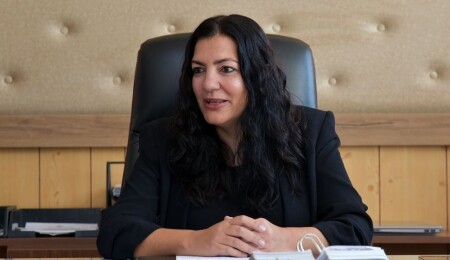
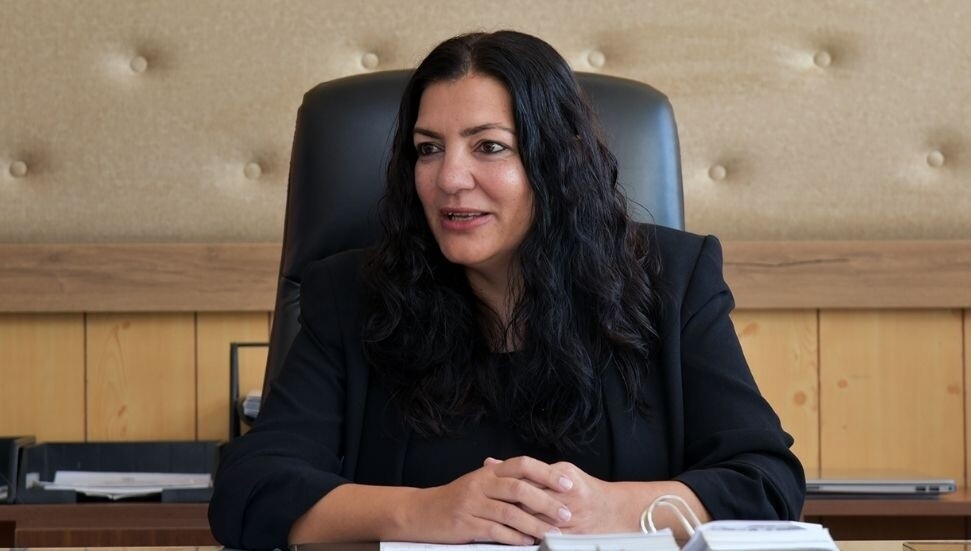
We spoke with newly appointed Meteorological Department Director Mediha Orun Sarp, the department’s first female director, about seasonal temperature and rainfall forecasts for autumn and winter, how El Niño could affect Cyprus, and the records recorded so far in 2026.
AVERAGE TEMPERATURE IN SEPTEMBER WAS 0.5 DEGREES ABOVE NORMAL
Sarp said there were no extreme temperature records in summer 2026 on the scale of those recorded in previous years, but that temperatures felt considerably higher due to high humidity.
Assessing data through the end of September, Sarp said average temperatures in January, February, July, August and September 2026 were above normal, while temperatures in March and April were below normal.
Sarp said the average temperature last month was calculated at 26.2°C, which was 0.5°C above the September average of 25.7°C.
She said February 2026 was the second-warmest February on record during the last 51-year period from 1975 to 2026.
The average temperature in February 2026 was 13.9°C, 2.5°C above the normal level of 11.4°C. The warmest February was recorded in 2016, when the average temperature reached 14.1°C.
Sarp noted that while this year saw the second-warmest February of the past 51 years, the lowest temperature in the country’s history was recorded in February last year.
February 2025 was the fifth-coldest February on record, with temperatures falling to -6.2°C in Geçitkale on February 25, 2025.
RAINFALL LAST MONTH WAS 168 PERCENT ABOVE NORMAL: AUGUST SAW RAINFALL AND WIND RECORDS
Sarp said rainfall in January, March, April, May, July, August and September 2026 was above normal, while February and June recorded below-normal rainfall.
She said 17.7 kilograms of rainfall per square metre was recorded last month, meaning rainfall was 168 percent above the normal level of 6.6 kg/m².
Sarp said March 2026 was the third-wettest March in the past 51 years, after 1987 and 2003. While the normal rainfall for March is 35 kg/m², 84 kg/m² was recorded in March 2026.
Sarp said August 2026 was the wettest August in the past 51 years, with 20.9 kg/m² of rainfall recorded. This was approximately 1,061 percent above the August average of 1.8 kg/m².
She added that another record was set for wind speed in August, with winds reaching 181.6 kilometres per hour in Gemikonağı on August 29. The previous wind-speed record was 171 km/h, recorded in Serdarlı in 2024.
“CLIMATE CHANGE IS INCREASING THE INTENSITY OF RAINFALL AND WINDS”
Sarp said that although temperature records are normally expected in August, this year saw rainfall and wind records instead.
She said August rainfall was not unusual, explaining that thunderstorms and heavy showers known as “instability rainfall” can occur during the summer, but that climate change is increasing the intensity of both rainfall and winds.
Sarp said the 20.9 kg/m² recorded in August was the average across the island, with higher figures recorded in some areas. She noted that 85 kg/m² of rainfall was recorded in Akıncılar and 50 kg/m² in Geçitkale.
“Looking back 50 years, these are large figures for August, but they are not particularly unusual. However, with climate change, the intensity of instability rainfall, thunderstorms and winds is increasing,” she said.
TEMPERATURES EXPECTED TO BE BELOW NORMAL IN WINTER MONTHS
Sharing the temperature forecasts for the coming winter period, Sarp said that under current conditions, average temperatures are expected to be below normal in October, November and December, and around normal levels in January, February and March.
“We are not expecting extremely cold conditions this month and over the next two months; temperatures are forecast to be 2 to 3 degrees Celsius below normal,” Sarp said.
She added that rainfall in October, November and December was expected to be above normal, particularly in the Karpaz, North Coast and Kyrenia Mountain Range regions, while rainfall in January, February and March was expected to remain around normal levels.
Sarp said above-normal rainfall was expected this month according to seasonal forecasts.
“There is currently a pattern consistent with these forecasts. Good rainfall was recorded across the country during the first two days of October,” she said.
Sarp said 41 kg/m² of rainfall was recorded in Yeşilırmak, 35 kg/m² in Kalkanlı, 24 kg/m² in Geçitkale and 43 kg/m² in Taşkent.
She also said rainfall in the Karpaz region was expected to be 40 percent above normal this month.
CAN EL NIÑO AFFECT CYPRUS?
Sarp drew attention to the El Niño climate phenomenon, which is being closely monitored by the Meteorological Department.
She said the World Meteorological Organization (WMO) had announced that there was a 100 percent probability of El Niño conditions developing and that the phenomenon was expected to continue until February 2027.
Sarp said El Niño could affect the reliability of seasonal forecasts for Cyprus.
She explained that Eastern Mediterranean countries such as Cyprus are affected by El Niño indirectly through changes in atmospheric circulation rather than directly.
Sarp recalled that during the most recent strong El Niño event in 2023-2024, temperature records were broken around the world, while Cyprus also recorded temperature records in January, February, March, April and June 2024.
“If El Niño conditions develop, Cyprus is expected to experience above-average temperatures during both summer and winter, longer and more severe periods of drought, and more irregular rainfall. Total rainfall could decrease, but short-duration heavy rainfall is expected to increase. This is the most dangerous type of rainfall for our country. Short-duration heavy rainfall poses a major threat, particularly in cities with inadequate infrastructure,” she said.
“THERE IS NO WEATHER RADAR”
Sarp said that according to the April 2026 report of the Intergovernmental Panel on Climate Change (IPCC), the global average temperature had increased by 1.4°C compared with the pre-industrial period, 9,580 gigatonnes (Gt) of glaciers had melted, global sea levels had risen by 9.4 centimetres, and global seawater temperatures had increased by 0.6°C.
She said the intensity of weather events was increasing as a result of climate change, while droughts were becoming longer and more severe and short-duration heavy rainfall was also becoming more frequent.
“Our country is already in a semi-arid climate zone and we experience drought constantly,” Sarp said, warning that the severity and duration of droughts would increase unless action was taken to combat climate change.
“We need to prepare ourselves to combat climate change with the mindset that ‘if you cannot change the climate, change yourself,’” she said, emphasizing that combating climate change requires government policies.
Sarp stressed the importance of focusing on risk management before disasters occur and highlighted the need to use meteorological data in urban planning, particularly in major cities.
She said the department had 51 years of data from 47 stations across the country and that these data were used by municipalities, public institutions and professional chambers in infrastructure planning.
Sarp said the department continuously shared data with Gönyeli-Alayköy Municipality and Nicosia Turkish Municipality in particular.
She said countries had begun placing greater emphasis on early warning systems as climate change intensified.
“Unfortunately, the most important of these systems, a weather radar, does not yet exist in our country. Therefore, the Chamber of Meteorological Engineers and the Meteorological Department are working to develop our own early warning system,” she said.
WEATHER FORECASTING CENTRE
Sarp said the Weather Forecasting Centre, which began operating in April, works around the clock in accordance with World Meteorological Organization standards.
She said the centre’s data were transmitted through Turkey to the World Meteorological Organization’s system.
Sarp said a chief forecaster and two observers were working at the centre.
She identified the department’s biggest shortcomings as shortages of meteorological engineers, weather forecasters, technicians and geophysical engineers.
Sarp said a meteorological tower capable of seeing both ends of the runway was needed at Ercan Airport, adding that Public Works and Transport Minister Faiz Sucuoğlu had also stated during an on-site inspection that such a tower was necessary at Ercan.
As the first female director of the Meteorological Department, Sarp said her goals included strengthening the department’s technical staff, enabling specialists to access scientific data more easily through the department’s new software system, establishing a Research and Development (R&D) division, advancing meteorological science and increasing cooperation with other professional stakeholders.
Comments
Attention!
Sending all kinds of financial, legal, criminal, administrative responsibility content arising from illegal, threatening, disturbing, insulting and abusive, humiliating, humiliating, vulgar, obscene, immoral, damaging personal rights or similar content. It belongs to the Member / Members.