Nami said the United Nations should take a more principled stance in the face of what he described as the negative attitude of the Greek Cypriot side, stressing that there could be no middle ground between the positions of the Turkish Cypriot and Greek Cypriot sides.
“There is no middle ground here between the position of the Turkish side and the position of the Greek Cypriot side; there is a right way,” Nami said.
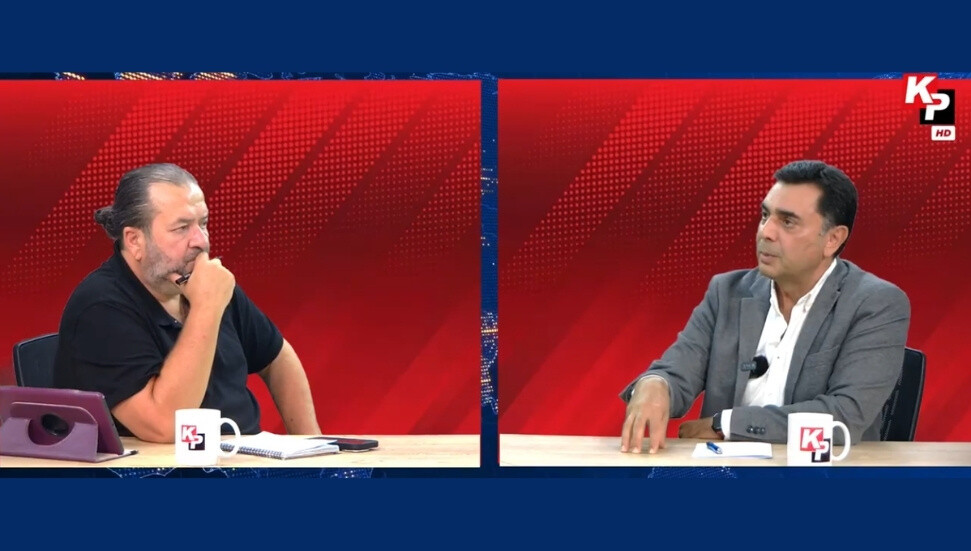
Nami was a guest on the “Gündem” programme on Kıbrıs Postası TV, hosted and presented by Ulaş Barış.
Nami assessed the failure to hold a trilateral meeting during the Cyprus talks, the 19-point proposal put forward by Greek Cypriot leader Nikos Christodoulides, and the role of confidence-building measures (CBMs) in the negotiating process.
He said priority should be given to methodology in efforts toward a comprehensive settlement and argued that the UN should focus on establishing the right method rather than seeking a “middle ground” between the two sides.
“IF THERE IS ANYONE TO BLAME, IT IS THE SECRETARY-GENERAL HIMSELF”
Nami commented on the failure to hold a trilateral meeting during contacts in New York held as part of the 81st session of the UN General Assembly.
“If there is anyone to blame, first and foremost it is the UN Secretary-General himself,” Nami said, arguing that a trilateral meeting had been put on the agenda without the necessary preparations being made by Secretary-General António Guterres.
Recalling that Guterres himself had said he would not call for a trilateral meeting before the necessary preparations had been completed, Nami said Christodoulides’ proposal for a trilateral meeting had been conveyed to President Tufan Erhürman through the UN Secretary-General’s Personal Representative for Cyprus, Maria Angela Holguín.
Nami said Holguín should first have conveyed the proposal to Guterres, who should then have assessed whether such a meeting would be beneficial rather than simply saying, “If the two leaders want it, we will hold a meeting.”
He said Erhürman, seeking to remain consistent with previous positions, had asked whether the meeting would be useful, saying, “If there is a benefit, let’s meet,” but that the meeting did not take place after no positive response was received from the UN side.
Nami argued that Christodoulides’ initiative was designed to create the perception that “I want it, they don’t.”
“THE 19-POINT PROPOSAL IS NOT A GOOD-FAITH INITIATIVE”
Commenting on Christodoulides’ new 19-point proposal, whose details have not been disclosed, Nami said every meeting should have a certain discipline.
“If you previously agreed on seven points, you first need to complete those. Without making any progress or reaching any agreement on those seven points, suddenly saying ‘I have another 19’ and taking control of the agenda is not the right approach. Therefore, I did not regard it as much of a good-faith initiative,” he said.
“CBMs SHOULD NOT TAKE PRECEDENCE OVER THE NEGOTIATING PROCESS”
Nami stressed that confidence-building measures should never take precedence over the process aimed at achieving a comprehensive settlement.
He said CBMs should instead be designed as elements supporting the comprehensive settlement process. Without a plan and framework for achieving a comprehensive settlement, he argued, “the basket of confidence-building measures” could not lead anywhere.
Nami said he and others had previously warned Holguín that CBMs should not appear to take priority over the comprehensive settlement process.
“It was as if we told them to do exactly the opposite. They convinced the Secretary-General as well, and progress on confidence-building measures has now become a precondition. There is now an order: first progress on confidence-building measures, then methodology, and then substance. This was extremely wrong,” he said.
“OUR MAIN ISSUE IS METHODOLOGY”
Nami said he believed the Turkish Cypriot side should also oppose this approach more clearly.
“It would be good if we could reach agreement on confidence-building measures, but our main issue is methodology,” he said.
Nami said the Crans-Montana process had come very close to a settlement, arguing that the reason “the last mile” could not be crossed was the failure to establish a cost for the side that obstructed the process.
He said an arbitration mechanism had not been established at the time.
“Now these things need to be put in place,” Nami said.
He argued that the discussion should focus on a timetable and how a return to the status quo could be prevented in the event of failure.
Nami said the UN had failed to address the issue because it had been too cautious.
“THE UN’S DUTY WAS TO TAKE A MORE PRINCIPLED STANCE”
Nami said the reason for this was the hard-line and negative stance adopted by the Greek Cypriot side.
“The UN’s duty was to take a more principled stance in the face of the Greek Cypriot side’s position,” he said.
“There is no middle ground to be found on such an issue,” Nami said, adding: “There is no middle ground here between the position of the Turkish side and the position of the Greek Cypriot side; there is a right way.”
Nami also said negotiations conducted without agreement on methodology would fail.
“The right thing, therefore, is to bring the sides together on methodology,” he said.


Comments
Attention!
Sending all kinds of financial, legal, criminal, administrative responsibility content arising from illegal, threatening, disturbing, insulting and abusive, humiliating, humiliating, vulgar, obscene, immoral, damaging personal rights or similar content. It belongs to the Member / Members.