

Body Recovered From Record Depth of 649 Metres in Shipwreck Search
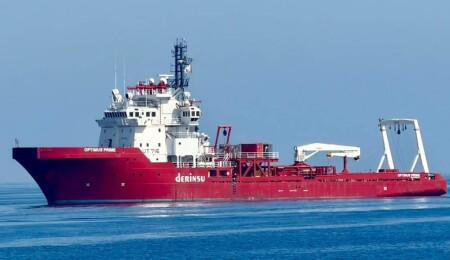
A body has been recovered from a depth of 649 metres during the search for missing passengers aboard the high-speed passenger vessel Filo Jet, which sank off Kyrenia on August 30.
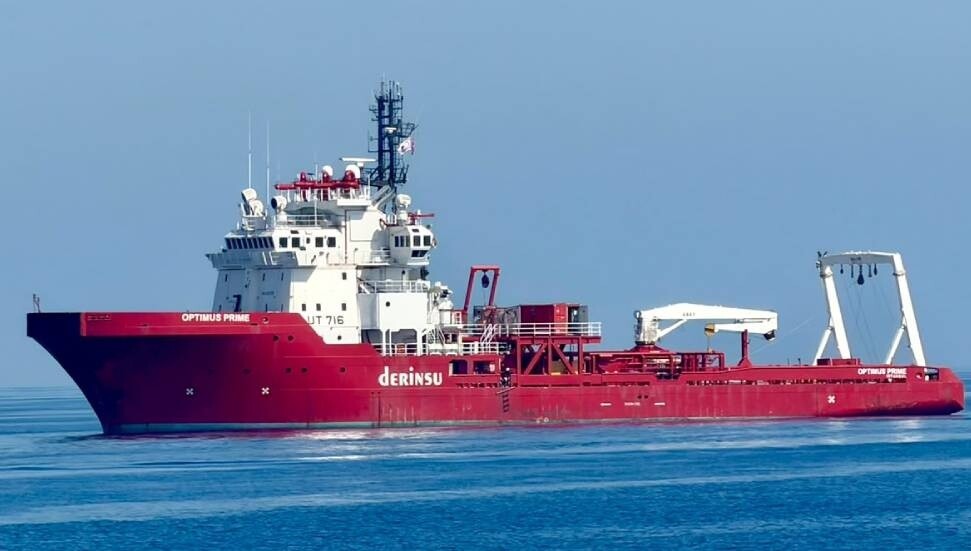
Okan Taktak, an official from underwater engineering company Derinsu, described the recovery as the deepest of its kind in Turkish maritime history. Search operations are continuing to locate the last missing person.
The Filo Jet, which operated between Kyrenia Harbour and Taşucu Port in Mersin, sank off the coast of Kyrenia on August 30, triggering a search and rescue operation that has now been underway for nearly four weeks.
Speaking to Anadolu Agency (AA), Taktak, whose company is conducting the underwater search, provided details of the operation.
He said the wreck was located at a depth of 554 metres on the first day. To reach the bodies believed to be inside, the team used an underwater cutting tool to open sections of the wreck around its corridor.
During the first week, efforts focused entirely on the wreck itself. After clearing objects from the debris, the team recovered the first body, Taktak said.
Once they were confident that no further bodies remained inside the wreck, the team began scanning the seabed across the surrounding area, extending to a point approximately 2.3 kilometres north of the location where the passenger vessel was last seen.
Taktak said that, of the 14 people on the list provided to the team, 13 bodies had been recovered and handed over to the authorities since the disaster.
He stressed that conducting search operations at such depths required advanced technology, while highlighting the experience of the engineers and remotely operated vehicle pilots involved.
The most recently recovered body was found at a depth of approximately 650 metres. “These are the deepest bodies ever recovered in Turkish maritime history. Working at that depth is certainly not easy, given underwater visibility and conditions on the seabed. However, our teams continued their work successfully,” Taktak said.
He added that the team had also recovered the vessel’s Voyage Data Recorder (VDR), commonly known as the black box, and handed it over to the authorities.
Describing the disaster as a “painful memory” for both the engineers involved and Turkish maritime history, Taktak said the team had worked around the clock throughout the operation.
“Working selflessly, 24/7, with all our personnel and engineers, we have so far recovered 13 bodies. We can imagine what the families waiting on the shore are going through, because we feel it too,” he said.
“We have just two days left in the search operation. We do not want to leave any area unsearched. Hopefully, we will locate and recover the final body during this time.”
Taktak said the operation had involved scanning approximately 5.5 billion cubic metres of seawater using water-column data, 10 million square metres of seabed and 1.6 million square metres of visual area.
“This is how we were able to achieve this result. We carried out the operation around the clock using both the robot’s camera footage and sonar images. It has not been easy. I hope we never have to go through a similar experience again, but we have now gained the experience of recovering a body from 649 metres,” he said.
A total of 28 people died in the disaster.
Comments
Attention!
Sending all kinds of financial, legal, criminal, administrative responsibility content arising from illegal, threatening, disturbing, insulting and abusive, humiliating, humiliating, vulgar, obscene, immoral, damaging personal rights or similar content. It belongs to the Member / Members.