

Kombos: Progress on Cyprus Issue Depends Largely on Turkey’s Position
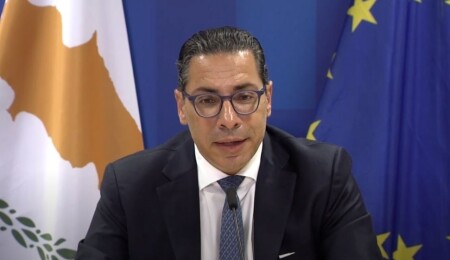
Greek Cypriot Foreign Minister Constantinos Kombos has said that progress on the Cyprus issue depends largely, or entirely, on Turkey’s position, arguing that UN Secretary-General António Guterres should present a framework outlining the key strategic points of disagreement to move negotiations forward.
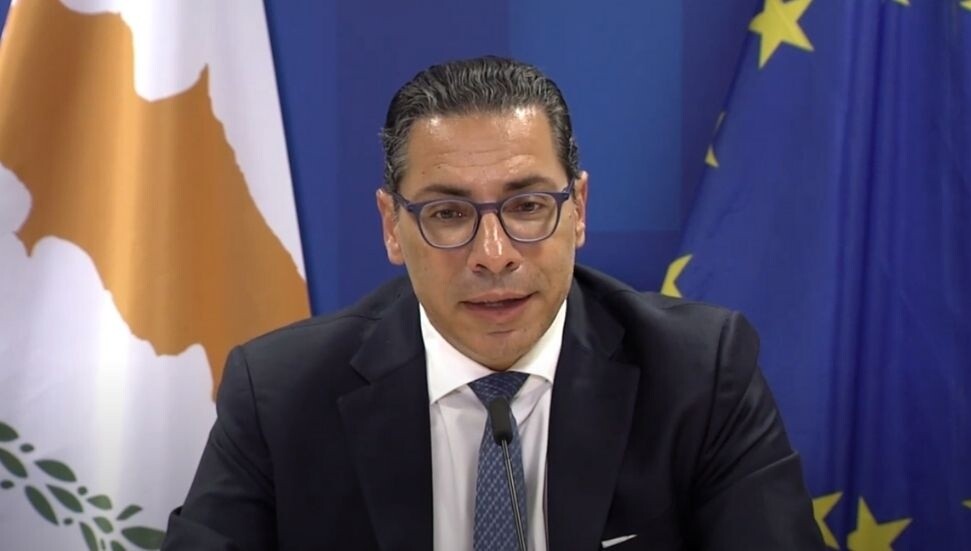
The Greek Cypriot side has effectively passed the initiative back to Guterres regarding the resumption of negotiations, according to Fileleftheros.
In a report headlined “Initiative Through Presentation of Strategic Points,” the newspaper said the Greek Cypriot side had “thrown the ball directly to the UN Secretary-General.” It reported that Kombos had questioned why Guterres had not yet presented a framework of strategic points concerning the negotiations.
Speaking on a programme on the Cyprus Broadcasting Corporation (RIK), Kombos rejected the term “stagnation” to describe the current state of the Cyprus issue. He said a critical moment would come when the UN Secretary-General placed a framework of “strategic points” on the table for negotiation, with the aim of bringing the process to a conclusion.
Kombos reiterated that such a proposal could trigger significant developments, describing it as an important moment for the negotiations.
He said the document could take the form of a record of convergences or, more likely, a document outlining strategic differences, similar to the approach taken at Crans-Montana. He referred to the UN Secretary-General’s 2017 report, which identified the strategic points of disagreement.
Kombos said the logic at the time was that reaching agreement on six points would open the way to a strategic agreement. The key question, he added, was whether Guterres would take such a step and, if so, why he had not done so yet.
Claiming that the Greek Cypriot side was ready and had nothing to fear as long as negotiations remained within the framework of UN Security Council resolutions, Kombos attributed the delay to objections from Ankara, which he said had also been confirmed publicly.
He argued that the next step depended on the UN Secretary-General determining that all parties were willing to participate in negotiations. The central issue, he said, was whether the Turkish side would abandon its position favouring a two-state solution and sovereign equality.
Regarding the record of convergences that the UN has said it would not hand over to the parties, Kombos said the Greek Cypriot side considered it “extremely useful” to have the document.
He argued that it would confirm the basis for a settlement and the progress achieved in negotiations up to the Crans-Montana conference.
Kombos also noted that the approaching end of Guterres’s term could affect the timetable. He suggested that contacts in Nicosia could intensify with the contribution of the UN Secretary-General’s Personal Representative for Cyprus, Maria Angela Holguín.
Asked whether the alliances established by the Greek Cypriot administration could pressure Ankara into returning to the agreed basis for a settlement, Kombos claimed that progress depended largely, or entirely, on Turkey.
He also described Ankara’s continued insistence on a two-state approach as the decisive factor preventing negotiations from taking place. He noted that Turkish President Recep Tayyip Erdoğan had recently reiterated this position from the UN General Assembly podium.
Kombos warned that questioning the Greek Cypriot administration’s alliances could risk absolving Turkey of responsibility while placing the Greek Cypriot side in a position of penalising itself. He identified three groups of critics:
-
Those who oppose the alliances because they believe they place Turkey in a competitive position and could backfire. Kombos linked this argument to the view that the Republic of Cyprus’s importance as an entity should be diminished.
-
Those who believe the deadlock can be overcome only through generous offers. He described this as an appeasement approach based on the expectation that the party responsible for the problem would change its attitude towards the victim, calling it unrealistic.
-
Those who do not question alliances in principle but challenge the choice of specific partners.
Asked why Turkey would return to the negotiating table if it considered Cyprus vital to its interests, Kombos replied that Turkey had done so in previous years for the same reason. He added that the uncertainty surrounding the Cyprus issue created serious problems for Ankara’s broader strategy, particularly in its relations with the European Union.
Comments
Attention!
Sending all kinds of financial, legal, criminal, administrative responsibility content arising from illegal, threatening, disturbing, insulting and abusive, humiliating, humiliating, vulgar, obscene, immoral, damaging personal rights or similar content. It belongs to the Member / Members.