

Erhürman: Trilateral Meeting More Likely to Yield Results Than Not
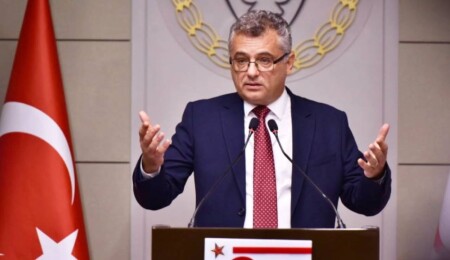
President Tufan Erhürman said he believed the likelihood of the expected trilateral meeting with the United Nations Secretary-General producing results was higher than the likelihood of it failing to do so.
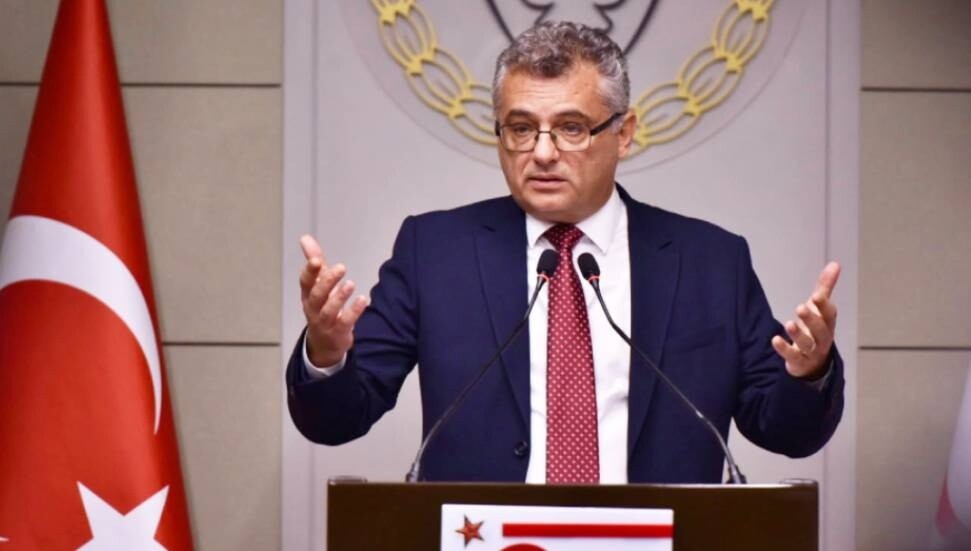
President Tufan Erhürman appeared on the “Face to Face” programme, hosted by Cem Kar on Genç TV. Erhürman discussed the negotiation process on the Cyprus issue, his position on political equality and his proposed methodology for a solution.
Emphasising that neither the Constitution nor the Declaration of Independence prevents a federal solution, Erhürman said Turkish Cypriots would not accept minority status. He noted that consultations with Turkey were continuing and that the 19-point proposal submitted by Greek Cypriot leader Nikos Christodoulides had not been rejected in its entirety. He also shared his expectations regarding the proposal for a transitional period and the anticipated trilateral meeting with the United Nations Secretary-General.
"I CANNOT SAY THAT TATAR ACTED UNCONSTITUTIONALLY"
President Tufan Erhürman was responding to presenter Cem Kar’s question about the apparent contradiction between the constitutional provision stating that the establishment of the Turkish Republic of Northern Cyprus (TRNC) does not prevent a federal solution and the two-state position advocated by former President Ersin Tatar.
Erhürman said he could not claim that Tatar had acted contrary to the Constitution, noting that the Declaration of Independence states that the establishment of the TRNC does not prevent a federal solution and, on the contrary, is a factor that could facilitate such a solution. He added that the emphasis on two peoples living side by side described the current situation.
Stressing that, as both a lawyer and president, he was obliged to comply with the Constitution and the Declaration of Independence, Erhürman said these documents envisaged efforts to achieve a lasting solution. He noted that the Turkish Cypriot people's determination to achieve a solution had continued despite what happened in 2004 and 2017.
"POLITICAL EQUALITY IS THE FIRST ITEM ON THE METHODOLOGY"
Erhürman said the problem stemmed from repeated attempts to use methods that had already been tried and disagreements over political equality. He recalled that political equality was the first item in his proposed methodology, adding that the substance, rather than the name, was what mattered in discussions surrounding the concept of methodology.
Erhürman said the Declaration of Independence could not be amended, while constitutional provisions could be changed. He also stated that the discourse on a two-state solution pointed to negotiations and therefore required a process conducted under the auspices of the United Nations. “We will seek a solution under the UN umbrella,” he said.
HOLGUÍN'S STATEMENTS
Erhürman also commented on the assessment by Maria Angela Holguín, the UN Secretary-General's Personal Envoy for Cyprus, that the points she had put forward did not constitute a genuine methodology.
Noting that Holguín had said in the same statement that talks could not progress without agreement on political equality and a rotating presidency, Erhürman said this approach was consistent with his own priorities.
“Let us assume that Ms Holguín does not consider this to be a methodology. But she is making it a priority issue for discussion and will not move on to other matters until progress is made on it. I have no problem with that, because that is precisely my concern,” Erhürman said.
"IF ROTATING PRESIDENCY IS GOING TO BE PUT BEFORE US ON THE LAST NIGHT, LET US NOT WASTE OUR TIME"
Stating that Turkey and the Turkish Cypriot side shared the same starting point, Erhürman said the main obstacle to a solution so far had been the Greek Cypriot side's unwillingness to share political power and resources on the island.
He said that if the Greek Cypriot administration demonstrated from the outset that it was prepared to accept such power-sharing, this could create confidence that a solution might be possible this time. Erhürman also stressed that the issue of a rotating presidency should not be left until the final stage of negotiations.
“If it is going to be put before us on the last night, let us not waste our time,” Erhürman said. He also suggested that Holguín's reluctance to classify the points in question under the heading of methodology might have stemmed from objections raised by the Greek Cypriot side or Christodoulides.
"THIS WILL NOT WORK WITHOUT ACCEPTANCE OF POLITICAL EQUALITY"
Erhürman said that failure to accept political equality would relegate Turkish Cypriots to minority status, adding that no compromise was possible on this issue.
“Either you are politically equal or you are merely a minority. So understand this: there will be no minority status. This will not work without political equality being accepted,” he said.
"I CANNOT BE EXPECTED TO SIT AT THE TABLE WHILE CHRISTODOULIDES TAKES CARE OF HIS BUSINESS AND COMES BACK"
Erhürman also explained what he meant when he said, “You cannot imprison me at the negotiating table.” He said that after negotiations, Christodoulides could go on to make agreements with Israel or Egypt, while he could attend a summit of the Organisation of Turkic States following the talks.
“I cannot be expected to sit at the table all the time while Mr Christodoulides takes care of his business and then comes back. That is not how the world works,” Erhürman said, stressing that the Turkish Cypriot side would continue to defend its rights not only at the negotiating table but also on the international stage.
"PAPADOPOULOS'S WORDS REVEAL THE FUNDAMENTAL DISAGREEMENT"
Assessing past developments concerning efforts to resolve the Cyprus problem, Erhürman drew attention to a statement made by then Greek Cypriot leader Tassos Papadopoulos after the signing of the Republic of Cyprus's EU Accession Treaty.
Erhürman said Papadopoulos's words, “I took over a state; I will not turn it into a community,” revealed the fundamental disagreement at the heart of the Cyprus problem. He said the statement demonstrated the Greek Cypriot side's approach of preserving the existing state structure.
Erhürman said this approach amounted to refusing to accept Turkish Cypriots as one of the two politically equal communities, adding: “To the extent that you are a state, I become a minority.”
"UNDERSTANDING THE ESSENCE OF THE CYPRUS PROBLEM TAKES TIME"
Erhürman said he had no doubts about the sincerity of Maria Angela Holguín, the UN Secretary-General's Personal Envoy for Cyprus.
He said he appreciated Holguín's efforts to help achieve a solution, but understanding the essence of the Cyprus problem required time. Erhürman noted that Holguín had experience mediating conflicts in Colombia, but said the unique circumstances of the Cyprus problem also needed to be assessed separately.
"THE TRANSITIONAL PERIOD PROPOSAL IS ON THE UN AGENDA"
Stating that he had observed that some elements of his proposed methodology were beginning to be understood and adopted by the United Nations, Erhürman highlighted the importance of the transitional period proposal in this context.
He noted that the concept of a transitional period was being addressed at the UN level for the first time to this extent in the current process. He explained that the proposal envisaged an agreement entering into force before referendums were held, followed by the referendums and then the transition to a permanent settlement.
Erhürman said the transitional period was also important in terms of political equality, pointing to the fourth item in his proposed methodology. Under this provision, if the Greek Cypriot side were to vote “no” again in a referendum, Turkish Cypriots would not return to the current status quo, and the rights secured during the transitional period would be protected.
HE REJECTS CLAIMS THAT TURKEY WAS NOT CONSULTED
Asked about Foreign Minister Tahsin Ertuğruloğlu's statements suggesting that the government had not been informed about steps concerning the opening of new crossing points, Erhürman said he did not wish to respond to Ertuğruloğlu on the matter.
He also rejected claims that Turkey had not been consulted about the opening of two crossing points, saying that assertions that he had failed to communicate with Turkey were incorrect.
“I will maintain relations with Turkey. I have been saying this from the very beginning. Everything concerning the Cyprus problem has always been decided in consultation with Turkey, as has been the case under every leader to date,” Erhürman said.
"WE ARE NOT REJECTING ALL 19 POINTS OF THE PROPOSAL"
Assessing the 19-point proposal submitted by Greek Cypriot leader Christodoulides, Erhürman said they were prepared to make use of some of its provisions that they considered reasonable.
Opposing the portrayal of crossing points as measures serving the interests of only one side, Erhürman criticised the presentation of the Haspolat crossing point as a demand made solely by Turkish Cypriots. He said opening Haspolat would also facilitate crossings for Greek Cypriots and that the example of Metehan should be considered from the same perspective.
Erhürman said they took a similar approach to the Kiracıköy–Eğlence and Kampos crossing points, adding that crossing points should not be assessed according to which side benefits from them.
He also said they did not oppose proposals for cooperation in sports, stressing that steps enabling the two communities to engage in joint activities and helping build confidence should be supported.
However, Erhürman said they had objections to the way the 19-point proposal had been presented. He questioned why a new 19-point proposal had been submitted 11 months later, when the United Nations had already drawn up a seven-point proposal based on previous discussions.
Nevertheless, Erhürman stressed that they were not rejecting all 19 points, adding that the real priority was to achieve meaningful progress on the substance of the Cyprus problem.
"A TRILATERAL MEETING IS MORE LIKELY TO PRODUCE RESULTS THAN NOT"
Erhürman also shared his expectations regarding the anticipated trilateral meeting with the United Nations Secretary-General, saying he believed the meeting would produce new developments.
Saying he did not want to make definitive predictions about whether an outcome would be achieved, Erhürman described his expectations as “51-49”. He recalled that the Secretary-General's term of office would end at the end of the month and said he therefore did not expect the meeting to conclude without results.
Emphasising the importance of holding the meeting in a trilateral format for the Turkish Cypriot side, Erhürman said their previous position on the 5+1 format had also been based on this approach.
He said they opposed discussing confidence-building measures with the guarantor powers, arguing that this method was intended to portray the Turkish Cypriot side and Turkey as occupying the same position and to push the Turkish Cypriot side into the background in the negotiation process.
Erhürman said the trilateral meeting was important in terms of recognising the Turkish Cypriot side as an equal interlocutor. He added that the format would convey the message: “You are negotiating with us, not with Turkey.”
Erhürman reiterated that he considered the likelihood of the meeting with the United Nations Secretary-General producing results to be higher than the likelihood of it failing to do so.
Comments
Attention!
Sending all kinds of financial, legal, criminal, administrative responsibility content arising from illegal, threatening, disturbing, insulting and abusive, humiliating, humiliating, vulgar, obscene, immoral, damaging personal rights or similar content. It belongs to the Member / Members.