

Simon Aykut’s Release Sparks Reactions in South Cyprus

The release in Israel of Simon Aykut, who was arrested in South Cyprus and extradited to Israel, has sparked reactions among Greek Cypriot political parties.
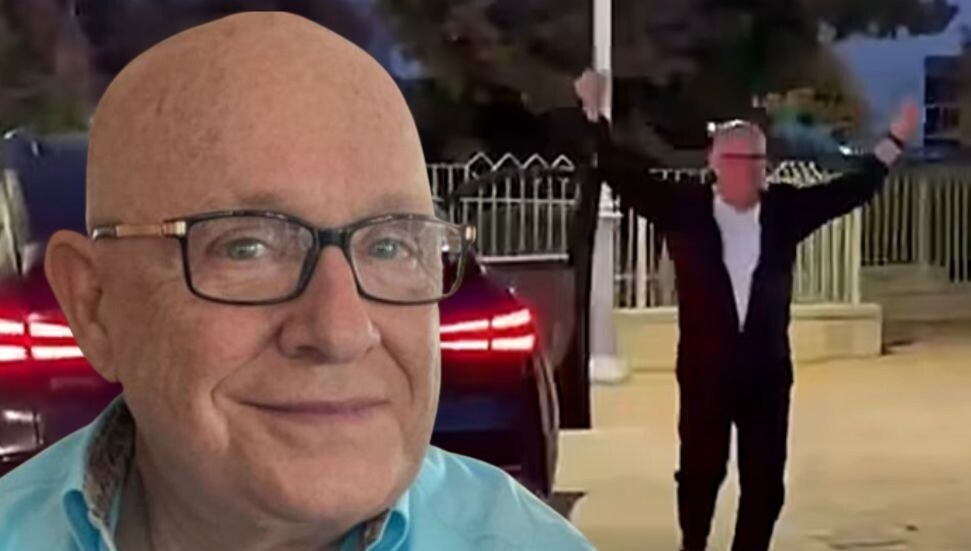
Simon Aykut, who was arrested in South Cyprus on allegations of exploiting properties belonging to Greek Cypriots in the TRNC and extradited to Israel, was released in Israel, triggering outrage in South Cyprus.
Under the headline “Aykut’s Release Sparks Reactions”, Politis reported that his release following extradition to Israel had triggered reactions across the Greek Cypriot political scene and put the government in a difficult position.
The newspaper claimed that the Greek Cypriot government had been unaware that Aykut would be released, while Israeli President Isaac Herzog had apologised to the Greek Cypriot government for not informing it in advance. It also highlighted that information had been received indicating that the decision to release Aykut had been taken due to his serious health problems.
Although the Greek Cypriot government sought to convey the message that Aykut’s release did not annul his conviction and that South Cyprus had not changed its policy regarding the use of former Greek Cypriot properties in the TRNC, the newspaper reported that footage of Aykut celebrating his release, which circulated on social media, weakened the government’s argument. It also covered statements by Greek Cypriot leader Nikos Christodoulides and political parties on the issue.
According to the report, Christodoulides said Aykut could have been released in August 2026 on health grounds even if he had continued serving his sentence in South Cyprus, emphasising that his release in Israel did not mean he would not have been freed had he remained in South Cyprus.
Christodoulides claimed that Israel had acknowledged the reasons for Aykut’s conviction, namely the “illegal exploitation of Greek Cypriot properties”, and alleged that purchases of property in the TRNC by Israelis had declined significantly following Aykut’s conviction.
Christodoulides said the “Republic of Cyprus is an internationally recognised country and a member of the United Nations, and therefore has international obligations”, adding that accepting Aykut’s request to be transferred to Israel was part of those obligations. He also said that “only his government has had the courage to bring such cases before justice” and that they would continue to do so.
CRITICISM FROM POLITICAL PARTIES
The newspaper noted that Christodoulides’ statements had failed to prevent criticism from Greek Cypriot political parties, reporting on reactions from DISY, AKEL and other parties.
DISY MP Nikos Georgiou said they had warned the government in February, when the decision to extradite Aykut to Israel was made, but their warnings had gone unheeded. He argued that there was a risk of so-called “illegal” activities involving Greek Cypriot properties in the TRNC resuming.
In a statement, AKEL said it had warned that sending Aykut to Israel could result in a fiasco, while allegations that Israel had exerted political pressure on the government were raised again.
The statement stressed that the government needed to provide a detailed explanation of what had happened.
The newspaper reported that ALMA and the Movement of Ecologists and Environmentalists had also issued similar statements, describing the developments as a complete fiasco.
The report also claimed that video footage of Aykut reuniting with his family following his release had been widely viewed online, raising questions about his health condition, which had been described as very serious.
Other newspapers covered the issue under the following headlines:
Alithia: “Aykut Released Nine Months After Warnings”
Haravgi: “Aykut, Convicted of Exploitation, Released; Government Left Unsupported”
Comments
Attention!
Sending all kinds of financial, legal, criminal, administrative responsibility content arising from illegal, threatening, disturbing, insulting and abusive, humiliating, humiliating, vulgar, obscene, immoral, damaging personal rights or similar content. It belongs to the Member / Members.