

Üstel Unveils “New Maraş Project” to Transform Famagusta’s Tourism Potential
Prime Minister Ünal Üstel has said that the Vision 2033 project, which his government has been working on for two years, aims to boost Famagusta’s tourism potential, strengthen its economy and revitalise coastal life. Describing the initiative as the “New Maraş Project”, Üstel announced that the 2,880-dönüm area housing Gülseren Barracks would be opened to the public and tourists.
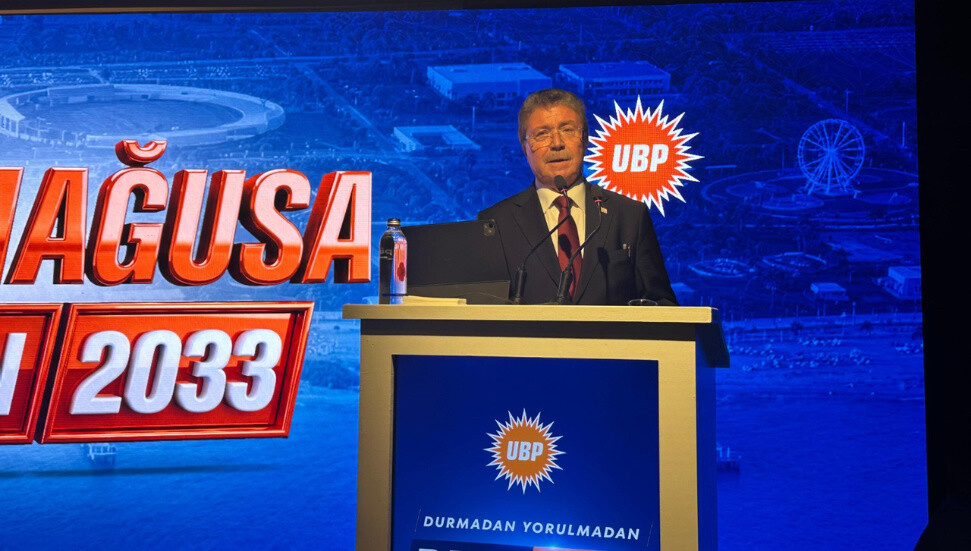
Speaking at the Vision 2033 launch organised by the National Unity Party (UBP) in Famagusta, UBP leader and Prime Minister Ünal Üstel outlined the objectives of the project prepared for the city and the government's approach to its implementation.
Stating that the Vision 2033 project, which they had been working on for two years, was one of the largest structural projects announced in their election manifesto, Üstel said the investment would represent a turning point for Famagusta as significant as Eastern Mediterranean University (EMU).
Noting that EMU had changed Famagusta’s destiny, Üstel said the new project would also shape the city's future. He stated that its implementation would reconnect Famagusta with the sea, strengthen its economy and further consolidate its position in the Eastern Mediterranean.
“FAMAGUSTA’S CONNECTION WITH THE SEA WILL BE RESTORED”
Recalling that Famagusta had historically connected with the world through the sea and possessed a coastline that had made Maraş known around the globe, Üstel said they aimed to restore and strengthen the city's relationship with the sea through Vision 2033.
Üstel said the project was intended to enable residents and tourists to access the beaches easily, spend more time along the coast and stay longer in Famagusta. He added that they wanted visitors to discover the city's history and explore its town centre.
Emphasising that the vitality generated by tourism should also be reflected in the city's everyday life, Üstel said the objectives included revitalising the town centre, expanding business opportunities for local traders and creating new employment opportunities for young people.
“THE AREA HOUSING GÜLSEREN BARRACKS WILL BE OPENED TO THE PUBLIC”
A promotional film screened at the launch also presented the project's physical details. Accordingly, the 2,880-dönüm area housing Gülseren Barracks will be opened to the public and tourists. The first 100 metres of the coastline will remain free of construction, while at least 75% of the project area will be allocated for direct public use.
Plans include the construction of an uninterrupted coastal promenade matching the length of the existing Maraş coastline, with free access to the beaches.
In addition to kiosks, cafés and restaurants, buildings designed to host cultural events are also planned as part of the project. Facilities such as a botanical garden, youth centre and congress centre are intended to contribute to Famagusta's social and cultural life.
The project is also expected to bring cycling routes, an indoor sports hall, basketball and football pitches, tennis courts and a water sports centre to the area. At a section named Mini Island Park, miniature replicas of historical monuments in Cyprus will be exhibited, offering visitors an opportunity to discover the island's history.
The design of the project is planned to be selected through a competition open to architects and urban planners working in the country, in cooperation with Eastern Mediterranean University. The facilities and commercial areas are targeted to become operational in the fourth year of the project.
“THE NEW MARAŞ PROJECT”
Stating that Famagusta had the potential to become one of the Eastern Mediterranean's leading tourism centres, Üstel highlighted the city's rich history and internationally recognised coastline. He said there were people who worked, established businesses and wanted to build their future in the city, describing the approach outlined under Vision 2033 as the “New Maraş Project”.
Expressing his belief that the tourism vitality generated by Maraş in the 1960s could be brought back to the heart of Famagusta, Üstel said they wanted the activity that would begin along the coastline to extend into the town centre as well. He stressed that the city's growth should be reflected in the everyday lives of Famagusta residents.
Stating that UBP's approach to development was based on enabling each city to grow through its own potential and ensuring that local residents benefit from investments, Üstel said they wanted to leave behind lasting works that future generations could also benefit from as the country prepared for the 50th anniversary of the Republic.
“THE PROJECT WILL BE IMPLEMENTED ACCORDING TO THE ANNOUNCED TIMETABLE”
Saying that UBP had carried out major reforms and implemented large-scale projects across the country, Üstel stated that they were assuming responsibility for Famagusta with the same determination.
Noting that they had announced support measures for women, young people, people with disabilities, workers, civil servants and farmers during the election campaign, Üstel said they would pass the paid military service law, which directly concerns young people's education, employment and family lives. He added that they would honour their commitment on this issue.
Stating that he had also made a commitment to Famagusta, Üstel stressed that they would implement the Vision 2033 project according to the announced timetable. He said their aim was to restore to Famagusta the vitality Maraş had generated in the 1960s and to shape the city's destiny together once again.
Üstel said they would listen to Famagusta residents at every stage of the project. He added that, alongside EMU's scientific research, the experiences of local residents, the expertise of professionals and the expectations of young people would also guide the process. Üstel said the people of Famagusta would have a say in shaping the future of the coastline.
EMPHASIS ON COOPERATION WITH THE MUNICIPALITY
Stating that they viewed urban development as a comprehensive process, Üstel said Famagusta Municipality would be one of the key stakeholders in the Vision 2033 project.
Noting that UBP's mayoral candidate Koral Bozkurt also had projects for the city, Üstel said combining their efforts would further expand Famagusta's prospects.
Üstel said they aimed to take Famagusta into a new century in cooperation with the municipality, adding that the city would grow not through words, but through work, effort and projects.
Wishing Koral Bozkurt and all mayoral candidates competing across the country success, Üstel said he believed UBP would achieve success in the general election and its mayoral candidates in the local elections. He stated that, following the elections, they aimed to work together with the municipalities in Famagusta district to deliver new projects for the city.
OTHER INFRASTRUCTURE PROJECTS ALSO HIGHLIGHTED
Referring to projects across the country, Üstel said the approach demonstrated through the water project was being continued through natural gas, fibre-optic and electricity projects. He stated that the common objective of these initiatives was to strengthen the state and improve people's quality of life, adding that the Famagusta Vision 2033 Project was also an important step in the country's tourism strategy.
Saying that they would continue implementing major projects in cooperation with Turkey during the new term of government following the elections, Üstel defended UBP's approach to politics as being focused on delivering results.
Comments
Attention!
Sending all kinds of financial, legal, criminal, administrative responsibility content arising from illegal, threatening, disturbing, insulting and abusive, humiliating, humiliating, vulgar, obscene, immoral, damaging personal rights or similar content. It belongs to the Member / Members.